Introduction
Steel components used in Pre-Engineered Buildings (PEB) must withstand demanding industrial environments, including moisture, dust, temperature variations, and exposure to corrosive substances. Steel surface preparation for PEB components is a critical manufacturing stage because it helps protective coatings adhere properly and improves the long-term corrosion resistance of fabricated steel.
For factories, warehouses, and industrial facilities in Noida, inadequate surface preparation can lead to premature coating failure, rust formation, and increased maintenance requirements. Even a high-quality paint system may not perform as intended if the steel surface contains oil, loose rust, mill scale, or other contaminants.
At Sumiraj, surface preparation should be considered an integral part of the steel fabrication and finishing process. Selecting the appropriate preparation method, checking surface cleanliness, and applying the specified coating system help support the durability and performance of PEB components.
What Is Steel Surface Preparation in PEB Manufacturing?
Steel surface preparation is the process of cleaning and conditioning steel before applying paint, primer, or another protective coating.
During manufacturing, steel plates and sections may contain mill scale, rust, grease, dust, moisture, and other contaminants. Fabrication can introduce additional residues, including welding spatter and cutting deposits.
If these contaminants remain on the surface, they may interfere with coating adhesion or contribute to corrosion beneath the coating.
Surface preparation aims to create a clean, suitably textured surface that meets the requirements of the selected coating system.
In PEB manufacturing, this process may be required for:
Primary structural members, including columns and rafters.
Secondary members, such as purlins, girts, and eave struts.
Bracing members and connection plates.
Welded assemblies and fabricated steel sections.
Other steel components that require protective coatings.
The appropriate preparation method depends on the steel's condition, the coating specification, the expected environmental exposure, and the project requirements.
Why Is Steel Surface Preparation Important for PEB Components?
1. Improves Paint and Primer Adhesion
Protective coatings must bond properly with the steel surface to perform effectively.
Oil, grease, dust, and loose corrosion products can create a weak boundary between the steel and the coating. This may lead to peeling, blistering, or premature coating failure.
Proper cleaning and surface conditioning help create the conditions needed for the specified coating system to adhere.
2. Helps Prevent Corrosion
Steel can corrode when exposed to moisture and oxygen. In industrial environments, chemical contaminants and airborne pollutants may further increase corrosion risks.
Removing loose rust, mill scale, and other contaminants helps prepare the surface for a protective coating.
However, surface preparation alone does not prevent corrosion permanently. Long-term protection also depends on the coating system, coating thickness, application quality, environmental conditions, and maintenance.
3. Supports Longer Service Life
A properly prepared surface allows the specified coating system to perform as intended. This can reduce the likelihood of premature coating deterioration and help control future maintenance requirements.
For large warehouses and industrial sheds, maintenance can be expensive because some structural components may be difficult to access after the building is operational.
Appropriate preparation before coating is therefore an important part of lifecycle planning.
4. Improves Coating Consistency
Steel components may have different surface conditions because of variations in material storage, fabrication, welding, and handling.
A controlled preparation process helps establish a consistent surface condition before coating application. This supports more predictable finishing quality across the manufactured components.
5. Reduces Avoidable Rework
If surface contamination or unsuitable preparation is identified only after painting, the affected coating may need to be removed and reapplied.
Inspecting the surface before coating helps identify problems early, reducing the likelihood of unnecessary rework, material waste, and production delays.
Common Methods of Steel Surface Preparation
Different preparation methods are suitable for different steel conditions and coating requirements. The method should be selected according to the approved specification rather than convenience alone.
1. Manual Cleaning
Manual preparation uses tools such as hand wire brushes, scrapers, and abrasive pads to remove loose rust, dirt, and other surface deposits.
It may be suitable for small areas, localised corrosion, touch-up work, or maintenance activities where the specified cleanliness level can be achieved.
However, manual cleaning may not provide the uniformity required for certain high-performance coating systems. It is also less efficient for preparing large quantities of structural steel.
2. Mechanical Power-Tool Cleaning
Power tools, including powered wire brushes and abrasive tools, can remove loose corrosion products, coatings, and other contaminants.
This method can be useful for local repairs, weld areas, and sections that require targeted preparation.
The resulting surface condition must still meet the applicable specification. Power-tool cleaning should not automatically be treated as equivalent to abrasive blasting because the methods can produce different surface profiles and cleanliness levels.
3. Abrasive Blast Cleaning
Abrasive blasting uses an abrasive medium propelled against the steel surface to remove mill scale, rust, old coatings, and other contaminants.
It is widely used in structural steel fabrication when the specified cleanliness and surface profile can be achieved through the selected blasting process.
The method can prepare large areas efficiently and provide a suitable surface for many protective coating systems.
The abrasive medium, blasting conditions, and resulting surface profile must be compatible with the coating manufacturer's requirements.
After blasting, the steel should be protected from contamination and flash rust before coating application. Surface cleanliness should be checked at the required stage of the process.
4. Degreasing and Chemical Cleaning
Oil and grease may require an appropriate degreasing or cleaning process before mechanical preparation or coating.
These contaminants should not simply be covered with paint because they can interfere with adhesion.
The cleaning product and procedure must be suitable for the steel and compatible with subsequent coating operations. Any residues left by the cleaning process must be removed as required by the specification.
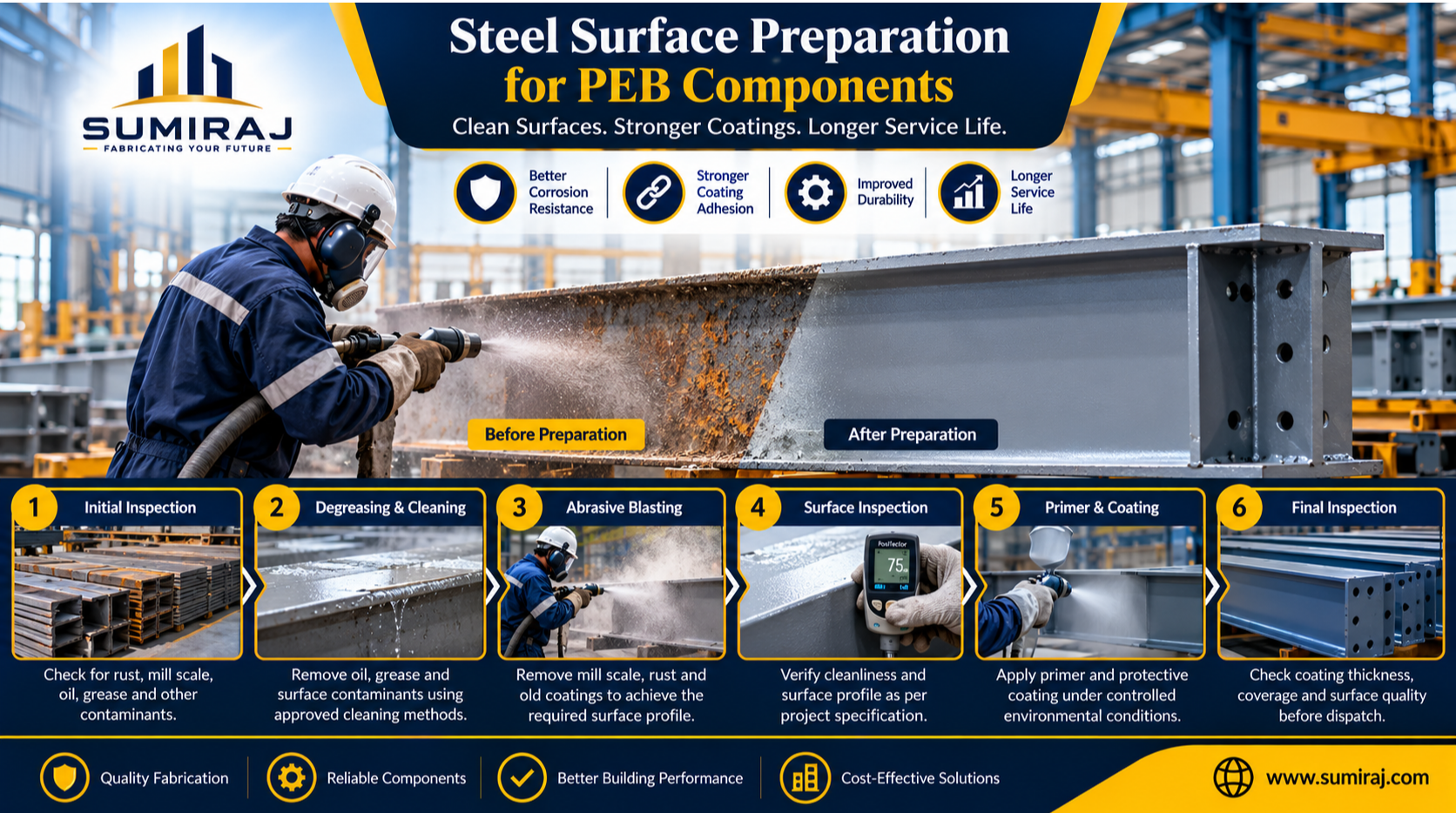
Step-by-Step Steel Surface Preparation Process
A controlled workflow helps ensure that the steel is ready for the specified protective coating.
Step 1: Inspect the Incoming Steel
Check the steel for visible rust, mill scale, oil, grease, moisture, and other contaminants.
Identify areas that require additional cleaning or special attention before proceeding.
Step 2: Remove Oil, Grease, and Contaminants
Use an approved cleaning method to remove substances that could interfere with mechanical preparation or coating adhesion.
Where necessary, degreasing should be performed before abrasive blasting to avoid spreading contamination across the steel surface.
Step 3: Remove Rust and Mill Scale
Select manual cleaning, power-tool cleaning, abrasive blasting, or another approved method according to the specified surface condition.
The selected process should achieve the required cleanliness level without damaging the steel or compromising its dimensions.
Step 4: Verify Surface Cleanliness and Profile
Inspect the prepared steel to confirm that it meets the project's acceptance criteria.
Depending on the specification, checks may include visual cleanliness, surface profile, dust contamination, and soluble salts.
Abrasive blasting does not automatically guarantee a suitable surface. The preparation process must be verified before painting begins.
Step 5: Apply Primer and Protective Coating
Apply the specified primer and coating system within the required environmental conditions and application window.
The steel should be checked for moisture, condensation, and contamination before coating. Environmental conditions and the time between preparation and painting can affect coating performance.
Step 6: Inspect the Finished Coating
After application and curing, inspect the coating according to the project requirements.
Checks may include dry-film thickness, coverage, visible defects, adhesion testing where specified, and verification of the coating system.
Any defects should be repaired using the approved procedure.
Quality Control Standards and Inspection Requirements
Steel surface preparation should follow the project specification, coating manufacturer's recommendations, and applicable standards.
Internationally recognised references may include ISO 8501 for visual assessment of steel surface cleanliness, ISO 8503 for surface roughness characteristics, and ISO 8502 for methods relating to surface cleanliness assessment.
The applicable requirements depend on the coating system and project specification. These references should not be treated as interchangeable because they address different aspects of surface preparation.
Quality checks may include:
Visual assessment of rust, mill scale, and other contaminants.
Verification of the specified preparation grade.
Surface profile measurement where required.
Dust and soluble-salt checks where specified.
Monitoring of ambient temperature, steel temperature, humidity, and dew point.
Inspection of primer application and dry-film thickness.
Documenting inspection results helps maintain consistency and provides a record that the specified preparation and coating requirements have been checked.
Benefits of Proper Steel Surface Preparation
Improved Coating Adhesion
A clean, suitably prepared surface supports proper bonding between steel and the protective coating.
Better Corrosion Protection
Removing contaminants and preparing the surface correctly helps the coating system protect steel against the intended environmental exposure.
Reduced Maintenance Requirements
Appropriate preparation and coating application can reduce premature coating deterioration and the need for avoidable repairs.
Consistent Manufacturing Quality
A defined preparation process helps achieve repeatable finishing results across different PEB components.
Better Cost Control
Identifying surface defects before coating can reduce rework, coating waste, and delays during fabrication.
Applications of Steel Surface Preparation in PEB Projects
Surface preparation is important for steel components used in various industrial building applications.
Manufacturing plants: Preparing structural members for the specified protective coating system.
Warehouses: Protecting columns, rafters, and other fabricated members against environmental exposure.
Logistics centres: Supporting coating quality across large steel structures with extensive roof and wall framing.
Industrial sheds: Preparing fabricated steel components before primer and paint application.
Coastal or corrosive environments: Supporting specialised coating systems designed for more demanding exposure conditions.
The preparation method and coating specification should reflect the building's actual operating environment rather than applying the same system to every project.
Steel Surface Preparation for PEB Projects in Noida
Industrial projects in Noida may include factories, warehouses, workshops, and logistics facilities exposed to different environmental conditions.
When planning a PEB project, buyers should confirm the required surface preparation grade, coating system, inspection procedures, and acceptance criteria before manufacturing begins.
The specification should also address how prepared steel will be stored and handled before coating. Dust, moisture, oil, and prolonged exposure can compromise the prepared surface.
For components that require transportation and site erection, the coating and handling procedures should account for possible damage during loading, unloading, and installation.
Agreeing on these requirements early helps the manufacturer, contractor, and project owner maintain consistent expectations throughout fabrication and construction.
Why Choose Sumiraj for PEB Components?
Sumiraj recognises the importance of coordinating steel fabrication, surface preparation, and protective coating requirements in industrial building projects.
Important considerations include:
Engineering expertise: Understanding component specifications and the requirements of the complete PEB system.
Quality steel: Working with material specifications appropriate to the project.
Customized designs: Coordinating component fabrication and finishing requirements with the building design.
Cost efficiency: Reducing avoidable rework through defined preparation and inspection procedures.
Timely delivery: Planning surface preparation and coating activities as part of the manufacturing sequence.
Indian standards: Considering applicable Indian requirements alongside the specified surface preparation and coating standards.
Technical support: Helping project teams clarify coating specifications, inspection requirements, and component finishing needs.
A coordinated approach helps industrial buyers evaluate surface preparation and coating as essential parts of the overall manufacturing process.
Frequently Asked Questions
1. Why is steel surface preparation necessary before painting?
Surface preparation removes contaminants such as oil, grease, loose rust, and mill scale that may interfere with coating adhesion. It also helps create the surface condition required by the specified coating system.
2. Which surface preparation method is commonly used for PEB components?
Abrasive blasting is widely used for structural steel fabrication when the required cleanliness and surface profile are specified and achievable. Manual and power-tool cleaning may be suitable for smaller areas or local repairs.
3. What is mill scale, and why should it be removed?
Mill scale is an oxide layer formed on steel during hot rolling. Depending on its condition and the coating specification, it may need to be removed because it can affect coating adhesion and long-term performance.
4. Does surface preparation alone prevent rust?
No. Surface preparation helps prepare the steel for protection, but long-term corrosion resistance depends on the coating system, application quality, environmental exposure, and maintenance.
5. How soon should steel be painted after abrasive blasting?
The timing depends on environmental conditions, the coating specification, and the risk of contamination or flash rust. Steel should be coated within the specified time window and re-inspected if its condition deteriorates before painting.
6. How is surface preparation quality checked?
Depending on the project requirements, inspection may include visual cleanliness assessment, surface profile measurement, dust checks, soluble-salt testing, and verification of environmental conditions before coating.
7. Can poor surface preparation increase PEB maintenance costs?
Yes. Poor preparation can contribute to coating failure and premature corrosion, potentially increasing inspection, repair, repainting, and access costs during the building's service life.
Conclusion
Steel surface preparation for PEB components is a fundamental step in achieving reliable coating performance and corrosion protection. Removing contaminants, selecting the correct preparation method, verifying surface cleanliness, and applying the specified coating system help protect fabricated steel and support the intended service life of industrial buildings.
For factories, warehouses, and industrial facilities in Noida, surface preparation should be addressed during project planning rather than treated as a final cosmetic operation. A controlled process, suitable inspection methods, and clear coating specifications help reduce avoidable rework and improve manufacturing consistency.
Sumiraj recognises the importance of integrating surface preparation and coating requirements into the wider PEB manufacturing process.
Discuss Your Project With Sumiraj
Planning a factory, warehouse, or industrial shed? Contact Sumiraj via WhatsApp or phone to discuss your steel fabrication requirements, surface preparation specifications, and protective coating needs before manufacturing begins.
Subscribe to our updates and stay informed about the latest trends, innovations, and cost-saving solutions in PEB construction, industrial buildings, and warehouse development.