
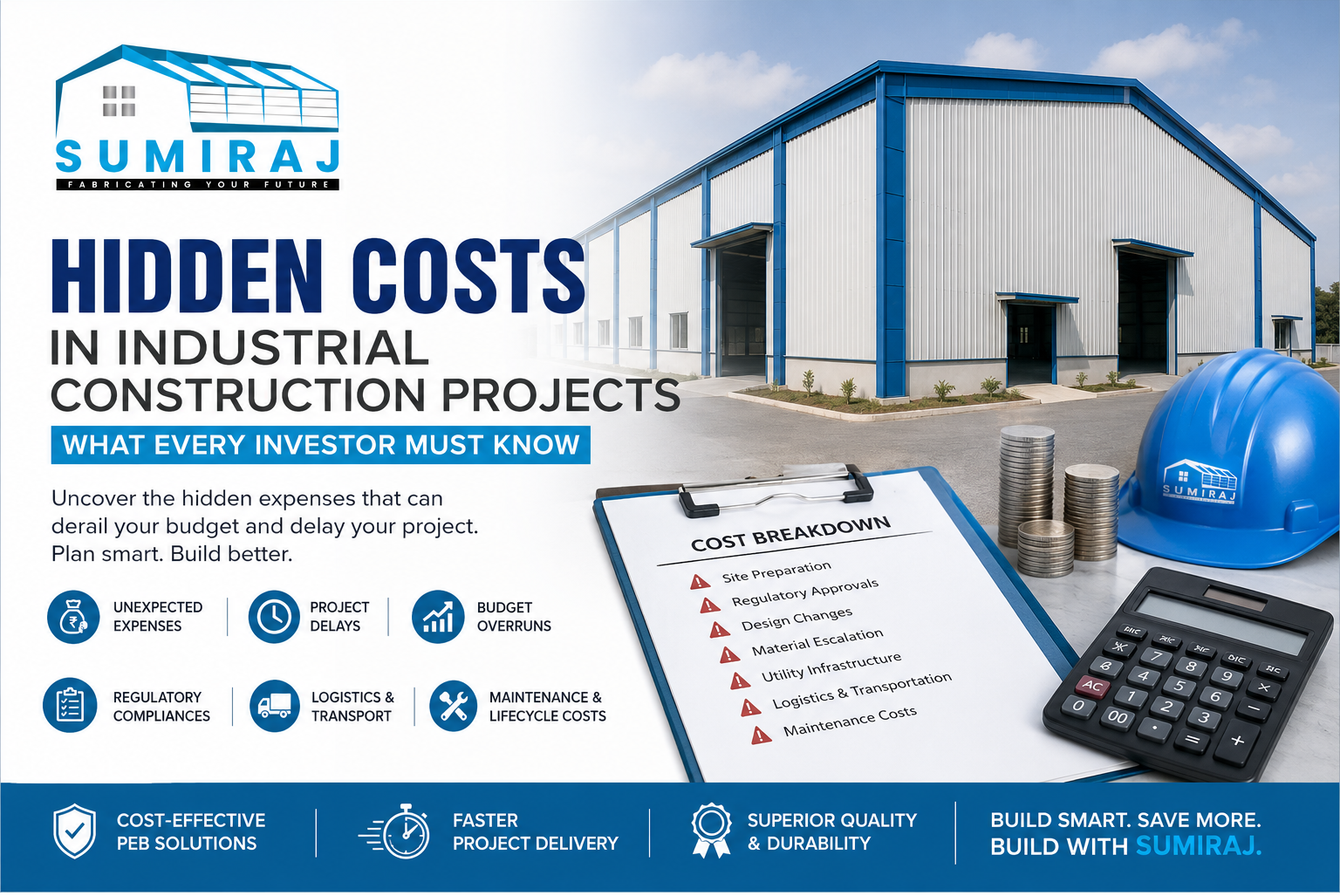
Hidden Costs in Industrial Construction Projects: What Every Factory Owner Must Know Before Building
Industrial construction projects involve significant investments, whether you are developing a manufacturing facility, warehouse, logistics hub, cold storage unit, or industrial shed. While most investors focus on land acquisition, civil work, and structural costs, many projects exceed their budgets because of hidden expenses that are often overlooked during planning.
These unforeseen costs can delay project completion, affect cash flow, and reduce overall return on investment. Understanding these hidden costs before construction begins can help factory owners, warehouse developers, industrial investors, logistics companies, and contractors make better decisions and avoid costly surprises.
At Sumiraj, we believe that successful industrial construction starts with transparent budgeting, efficient design, and proper project planning. In this guide, we explore the hidden costs in industrial construction projects and explain how modern Pre-Engineered Building (PEB) solutions can help control expenses.
Why Hidden Costs Matter in Industrial Construction
Many industrial projects begin with a preliminary budget that includes major expenses such as:
Land purchase
Site development
Civil foundations
Structural steel
Roofing and cladding
Electrical and plumbing systems
However, hidden costs often emerge during construction and can increase the total project cost by 10% to 30% or more.
When these expenses are not anticipated, businesses may face:
Budget overruns
Project delays
Financing challenges
Reduced profitability
Operational disruptions
Identifying these costs early allows project owners to allocate resources effectively and maintain control over their investment.
Common Hidden Costs in Industrial Construction Projects
1. Site Preparation and Land Development Costs
One of the most underestimated expenses is site preparation.
Before construction begins, the land may require:
Soil testing
Land leveling
Rock excavation
Filling and compaction
Drainage improvements
Boundary wall construction
Poor soil conditions can significantly increase foundation expenses. In some cases, additional ground stabilization measures may be required before construction can proceed.
2. Regulatory Approvals and Compliance Expenses
Industrial construction projects require multiple approvals from government authorities.
These may include:
Building permits
Environmental clearances
Fire safety approvals
Factory licenses
Pollution control certifications
Utility connection approvals
Application fees, consultant charges, and compliance-related modifications can add unexpected costs to the project budget.
3. Design Changes During Construction
Many projects experience scope changes after construction has started.
Examples include:
Additional floor space requirements
Equipment layout modifications
Structural redesigns
Utility upgrades
Expansion provisions
Late-stage design changes often result in:
Material wastage
Rework costs
Construction delays
Additional labor expenses
Comprehensive planning during the design phase helps minimize these costly revisions.
4. Escalation in Material Prices
Construction material prices can fluctuate significantly over time.
Common materials affected include:
Structural steel
Cement
Sand
Roofing sheets
Insulation materials
Electrical components
For projects with long execution periods, price escalation can substantially impact overall costs.
PEB structures often help mitigate this risk because most structural components are manufactured and procured early in the project cycle.
5. Labor Shortages and Productivity Issues
Labor availability remains a challenge across many industrial construction projects.
Unexpected labor-related expenses may arise from:
Skilled labor shortages
Increased wage rates
Overtime requirements
Productivity losses
Workforce accommodation costs
Project delays caused by labor issues can further increase equipment rental and site management expenses.
6. Equipment and Machinery Installation Costs
Many investors focus on building construction costs while underestimating machinery installation expenses.
Additional costs may include:
Heavy equipment foundations
Crane installation systems
Material handling equipment
Utility connections
Commissioning expenses
Specialized installation contractors
Proper planning between construction and production teams is essential to avoid unexpected expenditures.
7. Utility Infrastructure Costs
Industrial facilities require extensive utility infrastructure beyond the building structure itself.
These costs may include:
Electrical substations
Transformers
Water supply systems
Underground piping
Sewage treatment facilities
Compressed air systems
Backup power systems
Utility infrastructure can represent a significant percentage of the overall project budget.
8. Transportation and Logistics Expenses
Material transportation costs are often overlooked during budgeting.
Factors affecting transportation costs include:
Distance from manufacturing facilities
Fuel price fluctuations
Oversized cargo transportation
Loading and unloading expenses
Site accessibility challenges
For remote industrial locations, logistics costs can become substantial.
9. Weather-Related Delays
Weather conditions can directly impact construction schedules.
Potential weather-related costs include:
Rain delays
Water damage
Temporary site protection
Material storage requirements
Equipment downtime
Delays increase labor and equipment costs while extending project timelines.
10. Maintenance and Lifecycle Costs
Many project owners focus solely on initial construction costs without considering long-term maintenance expenses.
Buildings with poor design may require:
Frequent repairs
Roof replacements
Corrosion treatment
Waterproofing maintenance
Higher energy consumption
Considering lifecycle costs during the design stage often results in significant long-term savings.
How PEB Structures Help Reduce Hidden Costs
Faster Construction Timelines
Pre-Engineered Buildings are manufactured in controlled factory environments and assembled on-site.
This approach offers:
Reduced construction time
Lower labor requirements
Faster project completion
Earlier operational readiness
Shorter project durations help minimize financing and overhead costs.
Improved Cost Predictability
PEB projects provide better cost visibility because:
Components are designed in advance
Material quantities are accurately calculated
Manufacturing costs are predefined
Site work is minimized
This reduces the likelihood of budget overruns.
Lower Foundation Costs
PEB structures are significantly lighter than conventional RCC buildings.
Benefits include:
Smaller foundations
Reduced excavation
Lower concrete consumption
Faster civil construction
These savings can be substantial for large industrial projects.
Reduced Material Wastage
Factory-controlled manufacturing ensures:
Precision fabrication
Optimized material utilization
Minimal site wastage
Better quality control
This improves overall project efficiency and cost management.
Energy Efficiency Benefits
Modern PEB buildings can incorporate:
Insulated roofing systems
Natural ventilation
Skylights
Energy-efficient cladding
These features help reduce operational energy costs over the building's lifespan.
Cost Considerations Before Starting an Industrial Construction Project
To avoid hidden costs, project owners should evaluate the following factors:
Conduct Detailed Site Surveys
A thorough site assessment helps identify:
Soil conditions
Drainage requirements
Access roads
Utility availability
This reduces unexpected expenses later in the project.
Create a Realistic Contingency Budget
Industry experts often recommend allocating 5% to 15% of the total project cost as a contingency reserve for unforeseen expenses.
Choose Experienced Project Partners
Working with experienced contractors and PEB manufacturers improves:
Budget accuracy
Design efficiency
Project coordination
Construction quality
Experienced partners can often identify risks before they become expensive problems.
Plan for Future Expansion
Industrial facilities frequently require expansion as businesses grow.
Incorporating expansion provisions during the initial design phase can reduce future construction costs and operational disruptions.
Benefits of Identifying Hidden Costs Early
Businesses that proactively address hidden costs enjoy several advantages:
Better budget control
Faster project execution
Reduced financial risk
Improved investment returns
Enhanced operational efficiency
Greater project transparency
Stronger long-term profitability
Careful planning creates a more predictable and successful construction experience.
Frequently Asked Questions (FAQs)
What are hidden costs in industrial construction projects?
Hidden costs are expenses that are not included in the initial project estimate but arise during planning, construction, or operation. Examples include site preparation, regulatory approvals, utility infrastructure, material price escalation, and maintenance costs.
How much can hidden costs increase a project budget?
Depending on project complexity and planning quality, hidden costs can increase total project expenses by 10% to 30% or more.
Are PEB buildings more cost-effective than conventional construction?
In many industrial applications, PEB structures offer lower overall costs due to faster construction, reduced labor requirements, lighter foundations, and improved material efficiency.
How can project owners reduce unexpected expenses?
Detailed planning, accurate budgeting, comprehensive site surveys, contingency reserves, and working with experienced construction partners can significantly reduce unforeseen costs.
Why is lifecycle cost important in industrial construction?
Lifecycle cost includes maintenance, energy consumption, repairs, and operational expenses throughout the building's lifespan. A lower initial cost does not always result in the lowest long-term cost.
Conclusion
Hidden costs are one of the biggest challenges in industrial construction projects. From site preparation and regulatory approvals to material price fluctuations and utility infrastructure, unexpected expenses can quickly impact project profitability.
The key to successful industrial development lies in detailed planning, accurate budgeting, and choosing the right construction approach. Modern Pre-Engineered Building solutions offer a practical way to improve cost predictability, reduce project timelines, and minimize many of the hidden expenses associated with conventional construction.
At Sumiraj, we help factory owners, warehouse developers, logistics companies, and industrial investors build cost-effective industrial facilities with high-quality PEB solutions designed for long-term performance and value.
Contact Sumiraj Today
Planning an industrial shed, warehouse, factory building in, or logistics facility in Noida? Contact Sumiraj today to discuss your project requirements and discover how our PEB solutions can help you reduce construction costs, accelerate project completion, and maximize your return on investment.
Subscribe to Our Updates
Subscribe to our updates and stay informed about the latest trends, innovations, and cost-saving solutions in PEB construction, industrial buildings, and warehouse development.