
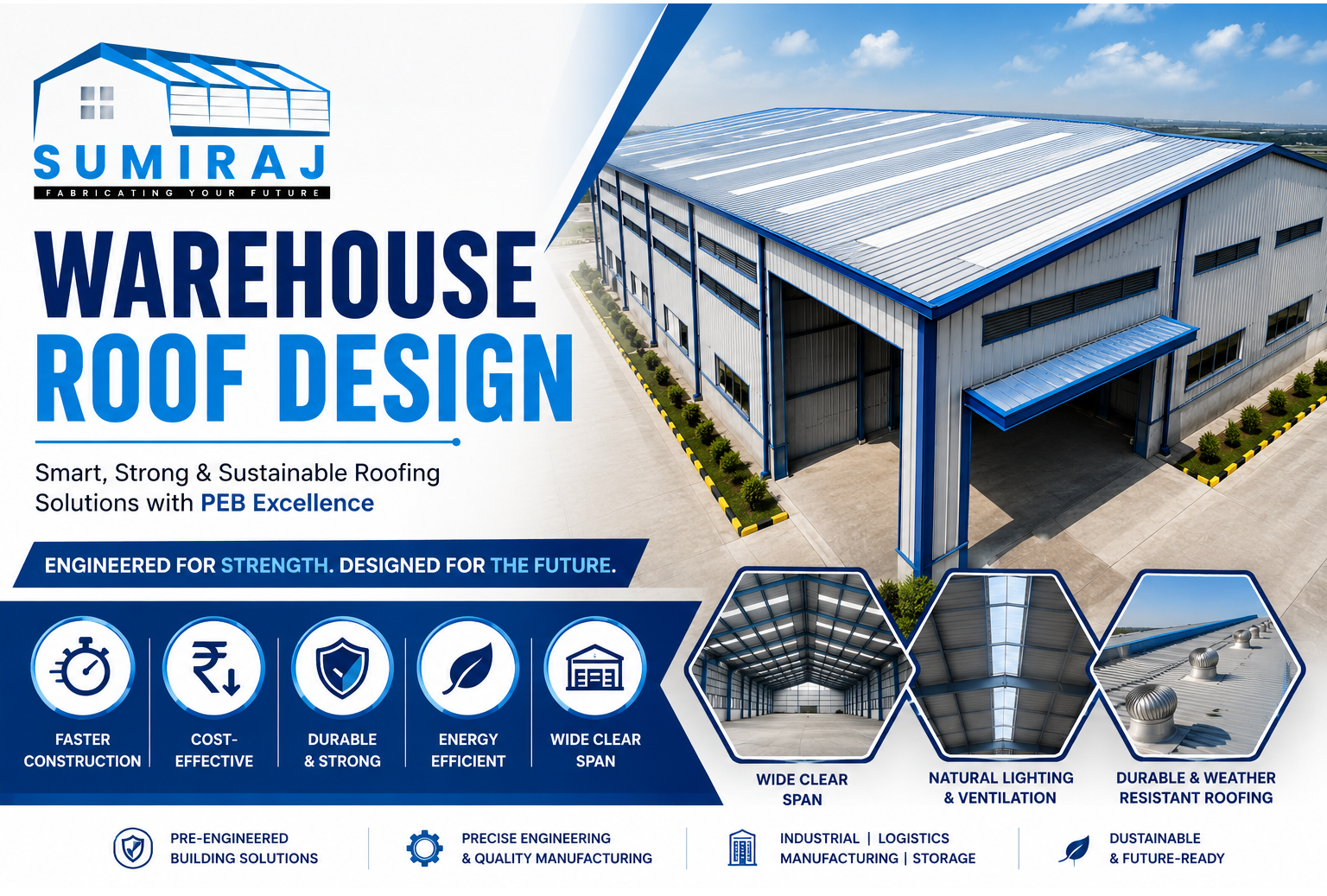
Warehouse Roof Design: Complete Guide to Efficient PEB Warehouse Roofing Solutions in Noida
Why Warehouse Roof Design Matters for Modern Warehouses
As India's manufacturing, logistics, and e-commerce sectors continue to grow, the demand for modern warehouses has increased significantly. While factors such as storage capacity and floor space are important, warehouse roof design plays a critical role in determining a building's durability, operational efficiency, and long-term costs.
A well-designed warehouse roof protects inventory, machinery, and employees from environmental conditions while improving energy efficiency and reducing maintenance expenses. This is one of the primary reasons businesses across India are increasingly choosing Pre-Engineered Buildings (PEB) for warehouse construction.
At Sumiraj, we design and manufacture high-quality PEB warehouse solutions that combine structural strength, cost efficiency, and long-term performance. This guide explores the key aspects of warehouse roof design, including design considerations, roofing systems, cost factors, and the advantages of PEB structures for modern industrial facilities.
What is Warehouse Roof Design?
Warehouse roof design refers to the engineering and planning of the roofing system used to cover a warehouse structure. It determines how effectively the roof handles:
Dead loads
Live loads
Wind loads
Rainwater drainage
Thermal insulation
Ventilation requirements
Solar panel installations
Future expansion possibilities
An efficient roof design ensures the warehouse remains safe, durable, and operationally efficient throughout its lifecycle.
Modern PEB warehouse roofs are designed using advanced engineering software that optimizes material usage while maintaining structural integrity.
Why Warehouse Roof Design Matters
A warehouse roof is much more than a protective covering. It directly affects the performance, durability, and operating efficiency of the entire facility.
Structural Stability
A properly designed roof distributes loads effectively and minimizes the risk of structural issues such as excessive deflection, leakage, corrosion, and premature deterioration.
Energy Efficiency
Roofing systems with proper insulation help reduce heat gain, lowering cooling costs and creating a more comfortable indoor environment.
Operational Continuity
Warehouses must operate efficiently throughout the year. A robust roofing system ensures uninterrupted protection from rain, wind, and extreme temperatures.
Reduced Maintenance Costs
Quality roofing materials and proper engineering reduce repair requirements and extend the service life of the building.
Improved Worker Comfort
Natural lighting, ventilation systems, and insulation contribute to a safer and more productive work environment.
Why PEB Warehouse Roof Design is Preferred Over Conventional Construction
Traditional warehouse construction methods often involve longer construction schedules, higher material wastage, and increased labor dependency.
PEB structures address these challenges through precision engineering and factory-manufactured components.
Advantages of PEB Roof Systems
Faster construction timelines
Optimized steel consumption
Superior structural performance
Better resistance to weather conditions
Lower lifecycle costs
Easy future expansion
Minimal maintenance requirements
For warehouse developers, factory owners, logistics companies, and industrial investors, PEB structures provide an ideal balance between cost, performance, and scalability.
PEB Warehouse Roof vs Conventional Construction
| Parameter | PEB Warehouse Roof | Conventional Construction |
|---|---|---|
| Construction Time | Faster | Slower |
| Material Usage | Optimized | Higher |
| Maintenance | Low | Moderate to High |
| Expansion Flexibility | Easy | Difficult |
| Cost Efficiency | High | Moderate |
| Structural Performance | Excellent | Good |
Key Components of a Modern Warehouse Roof Design
Primary Steel Frames
Primary frames form the main load-bearing structure of the warehouse and include:
Columns
Rafters
Portal frames
PEB structures use tapered steel sections that provide maximum strength while reducing unnecessary material consumption.
Secondary Members
Secondary structural components include:
Purlins
Girts
Eave struts
These members support roofing sheets and distribute loads efficiently throughout the structure.
Roofing Sheets
Modern warehouse roofs commonly use:
Galvalume sheets
Color-coated sheets
Standing seam roofing systems
These materials offer excellent durability, weather resistance, and corrosion protection.
Insulation Systems
To improve thermal performance, warehouses often use:
Rockwool insulation
Glass wool insulation
PUF panels
Ventilation and Skylights
Turbo ventilators and skylights improve airflow and natural lighting, reducing energy consumption while enhancing employee comfort.
Rainwater Management Systems
Proper gutter and downpipe systems prevent water accumulation and roof leakage during heavy rainfall.
Types of Warehouse Roof Designs
Single-Slope Roof
Suitable for smaller warehouses and industrial sheds, this design offers simple construction and effective water drainage.
Gable Roof
One of the most common warehouse roof designs in India, gable roofs provide excellent ventilation and efficient rainwater runoff.
Multi-Span Roof
Ideal for large industrial facilities, multi-span roofs maximize usable floor space while minimizing interior columns.
Monitor Roof
Monitor roofs feature raised sections that improve natural lighting and ventilation, making them suitable for manufacturing facilities and production units.
Curved Roof
Curved roofs offer modern aesthetics along with efficient drainage and strong structural performance.
Factors Influencing Warehouse Roof Design in India
Climate Conditions
India's diverse climate requires region-specific roof designs.
Examples include:
Corrosion-resistant roofing for coastal areas
Enhanced drainage systems for high-rainfall regions
Insulated roofing for hot climates
Wind Loads
Warehouses in states such as Gujarat, Odisha, and Tamil Nadu must be designed to withstand higher wind pressures.
Rainfall Intensity
Heavy monsoon regions require roofing systems capable of handling significant rainfall efficiently.
Building Usage
Warehouse requirements vary depending on industry type, including:
FMCG
Pharmaceuticals
Automotive
Logistics
E-commerce
Cold storage
Future Expansion
PEB structures can be designed to accommodate future expansion with minimal disruption to ongoing operations.
Benefits of PEB Warehouse Roof Design
Faster Project Completion
Since PEB components are manufactured off-site and assembled on-site, construction time can be reduced by 40–60% compared to conventional construction.
Lower Construction Costs
Optimized structural design minimizes steel consumption and labor requirements.
Large Clear-Span Areas
PEB warehouses provide wide column-free spaces, improving storage capacity and operational efficiency.
Superior Durability
High-quality steel and protective coatings ensure long-term structural performance.
Better Weather Resistance
PEB roofing systems perform effectively against:
Heavy rainfall
Wind loads
Temperature fluctuations
Energy Efficiency
Insulated roofing systems help reduce cooling costs and improve overall building performance.
Sustainability
PEB structures use recyclable steel and generate less construction waste than conventional construction methods.
Easy Maintenance
Modern roofing materials require minimal maintenance throughout their service life.
Warehouse Roof Design for Logistics and E-Commerce Facilities
India's logistics and e-commerce sectors are experiencing rapid expansion. Major warehousing hubs such as Delhi NCR, Mumbai, Pune, Ahmedabad, Chennai, Bengaluru, and Hyderabad require warehouse infrastructure that supports:
Large storage volumes
Automated systems
Material handling equipment
Solar installations
Temperature-controlled environments
PEB warehouse roofing solutions are particularly well suited to these applications because they provide large clear spans, design flexibility, and future expansion capability.
Solar Panel Integration in Warehouse Roof Design
Industrial businesses are increasingly investing in rooftop solar systems to reduce operating costs and improve sustainability.
A properly designed PEB warehouse roof can support:
Rooftop solar panels
Solar mounting structures
Future renewable energy expansion
Benefits include:
Reduced electricity bills
Improved sustainability
Faster return on investment
Planning for solar integration during the design stage helps avoid costly modifications later.
Factors Affecting Warehouse Roof Design Cost in India
Several factors influence warehouse roofing costs:
Building Size
Larger spans typically require more advanced engineering and structural systems.
Roofing Material
Costs vary depending on the type of roofing sheets and insulation selected.
Insulation Requirements
Insulated warehouses require a higher initial investment but provide significant long-term energy savings.
Wind and Seismic Design
Buildings located in high-wind or seismic zones may require additional structural reinforcement.
Ventilation and Skylights
Additional features improve operational efficiency but may increase project costs.
Solar Readiness
Designing for future solar installations may require enhanced structural capacity.
Although costs vary from project to project, PEB warehouse roofs generally provide a lower total cost of ownership than conventional construction methods.
How Sumiraj Delivers Superior Warehouse Roof Design Solutions
At Sumiraj, every warehouse project is engineered to meet the client's operational and business objectives.
Our capabilities include:
Custom PEB warehouse design
Structural analysis and optimization
High-quality manufacturing
Roofing and cladding systems
Insulation solutions
Solar-ready structures
Fast project execution
Our experienced team ensures every project complies with relevant Indian standards while maximizing value, safety, and performance.
Frequently Asked Questions (FAQs)
What is the best roof design for a warehouse?
The best roof design depends on building size, location, and operational requirements. Gable and multi-span PEB roofs are among the most popular options.
Why are PEB warehouses better than conventional warehouses?
PEB warehouses offer faster construction, lower costs, greater flexibility, improved durability, and better long-term performance.
How long does a PEB warehouse roof last?
With proper maintenance and quality materials, a PEB warehouse roof can last 30 to 50 years or more.
Can solar panels be installed on a PEB warehouse roof?
Yes. PEB structures can be specifically designed to support rooftop solar systems.
Can a warehouse be expanded later?
Yes. One of the major advantages of PEB construction is its ease of future expansion.
Which roofing sheet is best for a warehouse?
Galvalume and color-coated steel sheets are among the most popular choices for warehouse roofing due to their durability, corrosion resistance, and long service life.
Conclusion
An efficient warehouse roof design is essential for ensuring durability, operational efficiency, energy savings, and long-term profitability. As India's industrial and logistics sectors continue to grow, businesses are increasingly choosing Pre-Engineered Buildings (PEB) because they offer faster construction, lower lifecycle costs, greater flexibility, and superior structural performance.
Whether you are planning a manufacturing warehouse, logistics hub, industrial storage facility, or e-commerce fulfillment center, investing in a professionally engineered PEB roof system can provide substantial long-term value.
Sumiraj specializes in designing and manufacturing high-performance PEB warehouse solutions tailored to the needs of Indian industries.
Ready to Build a High-Performance Warehouse IN Noida?
Whether you are developing a new warehouse, expanding an existing facility, or planning a large-scale logistics park, Sumiraj has the expertise and manufacturing capabilities to deliver reliable and cost-effective PEB solutions tailored to your project requirements.
Contact the Sumiraj team today via WhatsApp or call us directly to discuss your project requirements and explore the most cost-effective PEB solution for your business.
Why Choose Sumiraj?
Customized PEB design and engineering
High-quality steel structures
Fast project execution
Cost-effective construction solutions
Warehouses, factories, logistics parks, and industrial buildings
End-to-end project support
Subscribe to Our Newsletter
Stay informed about the latest trends, innovations, and cost-saving solutions in PEB construction, industrial buildings, warehouses, and infrastructure development.
Subscribe to our newsletter and gain valuable insights from industry experts, project case studies, emerging technologies, and best practices that can help you make smarter construction and investment decisions.
Get in touch with Sumiraj today and build a stronger future with innovative PEB solutions.