Introduction
Choosing the right secondary structural members is essential for building a durable and efficient steel structure. Galvanized C purlins are widely used in pre-engineered buildings (PEBs) because they provide support for roofing and wall cladding while offering protection against corrosion. Their C-shaped profile, relatively low weight, and practical installation make them suitable for many industrial construction applications.
For warehouse developers, factory owners, and contractors in Noida, galvanized C purlins can be an important part of a cost-conscious building design. However, selecting the correct section involves more than comparing prices. Section dimensions, steel thickness, coating specifications, loads, spacing, and connection details must all match the project requirements.
At Sumiraj, secondary framing is an important consideration when planning PEB systems. Understanding the benefits and applications of galvanized C purlins helps industrial buyers make informed decisions about their building's structural requirements and long-term maintenance.
What Are Galvanized C Purlins?
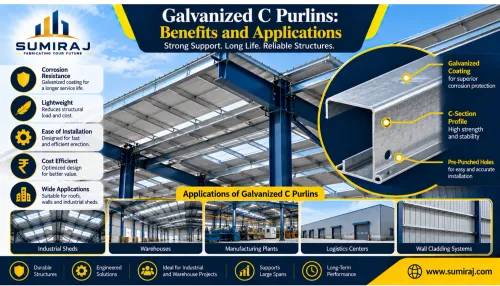
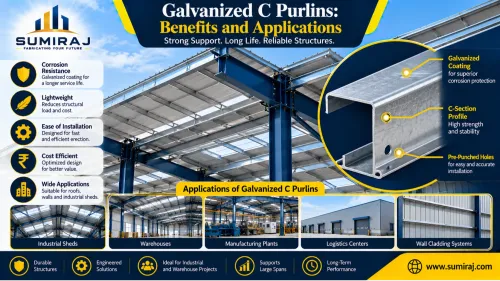
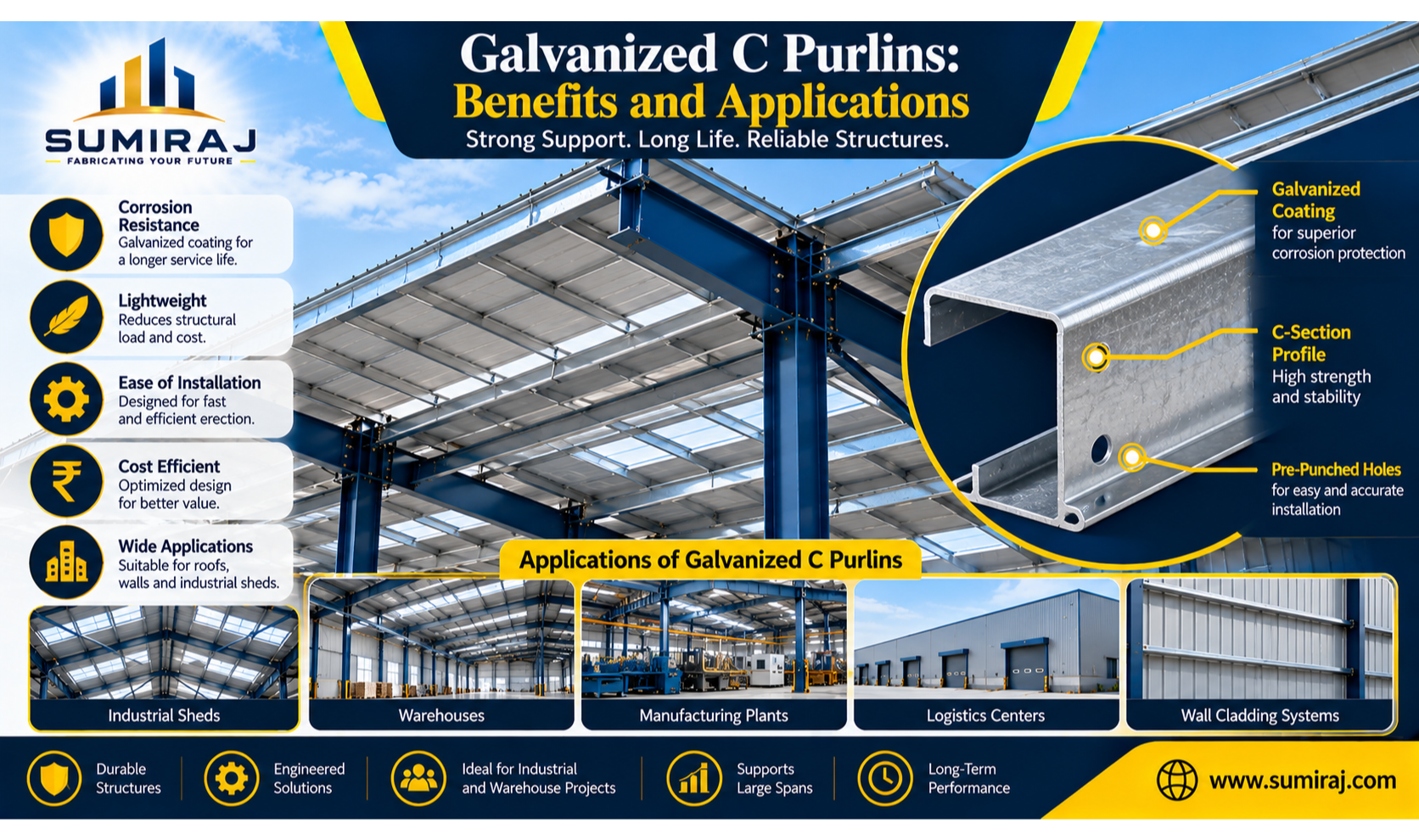
C purlins are cold-formed steel sections with a profile resembling the letter “C”. They generally have a web, two flanges, and, depending on the product design, return lips that improve the section's properties.
Galvanized C purlins are manufactured from steel protected with a zinc coating. This coating helps reduce corrosion by providing a barrier between the steel and its environment, with additional sacrificial protection where the coating is damaged.
These sections are commonly installed as secondary framing members. Their main function is to support roof sheeting or wall cladding and transfer the loads assigned to them to the primary steel frame.
The performance of a C purlin depends on its section geometry, material grade, thickness, span, support conditions, connections, and loading. Galvanization improves corrosion protection, but it does not replace structural design.
How Are Galvanized C Purlins Manufactured?
Understanding the manufacturing process helps buyers evaluate product quality and specifications.
1. Steel Coil Selection
Manufacturing begins with steel coil that meets the specified material properties and dimensional requirements. The steel thickness, grade, and coating specification should be appropriate for the intended application.
2. Galvanized Coating
Depending on the product, the steel may be coated with zinc before cold forming. The specified coating designation, coating mass, and applicable product requirements should be checked in the supplier's documentation.
Galvanization helps protect the steel against corrosion, but the level of protection depends on the coating, environmental exposure, and maintenance conditions.
3. Cold Roll Forming
The steel strip passes through a sequence of forming rollers that shape it into a C-section. This process creates the required web, flanges, and lips while maintaining the specified profile dimensions.
4. Cutting and Inspection
The formed section is cut to the required length. Quality checks may include section dimensions, thickness, straightness, coating condition, and material identification.
The finished purlin should match the approved specifications and structural design.
Key Benefits of Galvanized C Purlins
1. Improved Corrosion Resistance
The zinc coating helps protect steel from moisture and other environmental conditions that contribute to corrosion.
This is particularly useful in industrial sheds and warehouses where secondary members may be exposed to humidity, condensation, or outdoor weather during service.
The level of protection depends on coating specifications and the operating environment. Highly corrosive conditions may require a more specialised protection strategy.
2. Lightweight Construction
Cold-formed C purlins can provide suitable structural performance with relatively low self-weight when correctly designed.
Lower member weight can simplify handling and installation and may reduce the additional load imposed on the primary frame. However, the actual structural capacity must be verified for the intended span and loading conditions.
3. Efficient Installation
Galvanized C purlins are generally supplied in prepared lengths and installed according to fabrication and erection drawings.
Their consistent profiles and connection arrangements can support organised installation. Accurate cutting, correct orientation, and appropriate fasteners help avoid unnecessary adjustments at the site.
4. Practical Material Use
C purlins are available in different section dimensions and thicknesses, allowing engineers to select a suitable profile for the project.
Engineering calculations help balance strength, stiffness, deflection limits, and material weight. This is more reliable than selecting a purlin based only on its price per metre.
5. Reduced Routine Coating Requirements
When the galvanizing specification is suitable for the exposure conditions, galvanized purlins may require less routine coating maintenance than unprotected steel.
However, damaged areas, cut edges, connection details, and surfaces exposed to aggressive conditions may need inspection and repair. Galvanized steel should not be considered maintenance-free.
6. Versatility Across Building Applications
Galvanized C purlins can be used in various steel-framed buildings, including industrial sheds, warehouses, workshops, and selected commercial structures.
Their suitability depends on the design loads, support conditions, and roofing or cladding system.
Galvanized C Purlins vs Other Purlin Options
C purlins are one of several section types available for secondary steel framing. The correct choice depends on the structural arrangement and installation requirements.
C Purlins
C purlins can be suitable for simply supported spans and framing arrangements where their section properties meet the design requirements. Their profile also makes them useful for certain wall-framing applications.
Z Purlins
Z purlins have a Z-shaped profile and may be suitable for continuous or lapped arrangements across multiple spans when specifically designed for that purpose.
Their overlapping capability can offer advantages in certain roof-framing layouts, but the connection details and structural behaviour must be checked.
Galvanized vs Painted Steel Sections
Galvanized sections have a zinc coating that helps protect the steel against corrosion. Painted sections rely on the specified primer and coating system for protection.
Neither is automatically superior in every environment. The choice depends on the expected exposure, coating specification, fabrication requirements, cost, and maintenance plan.
Important Factors When Selecting Galvanized C Purlins
Section Size and Thickness
The web depth, flange width, lip dimensions, and steel thickness influence the section's structural properties. The selected purlin must satisfy the required strength and serviceability checks.
A deeper section is not automatically the right choice if its connections, support conditions, or other properties do not suit the project.
Span and Spacing
The distance between supports affects the forces and deflection in the purlin. Spacing must also suit the roof sheet or wall cladding being supported.
A suitable arrangement is determined through structural calculations and the cladding manufacturer's support requirements. Universal spacing should not be assumed for every building.
Design Loads
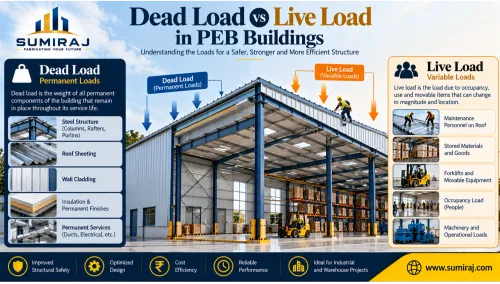
Purlin design may need to account for dead loads, wind pressure and suction, maintenance loads, and other applicable actions.
Skylights, suspended services, solar panels, or other added loads should be included where relevant. Unplanned attachments can change the demand on the purlins.
Coating Specification
Confirm the coating designation and applicable product requirements before purchasing galvanized C purlins. The required protection depends on the environmental conditions and expected service life.
Documentation should identify the material and coating specification, rather than relying solely on a general description such as “galvanized”.
Connection and Installation Details
Purlins must be connected to rafters or other supports using the approved details. Fastener type, quantity, hole arrangement, bridging, and restraint requirements depend on the design.
Incorrect installation can affect the intended structural performance even when the purlin itself meets its material specifications.
Applications of Galvanized C Purlins
Galvanized C purlins are used in a variety of steel-building applications.
Industrial sheds: Supporting roof sheeting and selected wall-cladding systems.
Warehouses: Providing secondary roof framing across storage and distribution facilities.
Manufacturing plants: Supporting roof systems around production and workshop areas.
Logistics centres: Serving as secondary members in buildings designed for receiving, storage, and dispatch.
Commercial steel buildings: Supporting suitable roof or wall systems where the structural design permits.
Agricultural and storage structures: Used in appropriate buildings where member capacity and corrosion protection meet the service conditions.
Each application requires suitable section selection and connection detailing. The same C purlin specification should not automatically be applied to every building.
Galvanized C Purlins for Projects in Noida
Industrial construction in Noida may involve warehouses, factories, logistics facilities, and storage sheds exposed to different environmental conditions.
When planning a PEB project, developers should confirm the purlin section, thickness, coating specification, span, spacing, and connection arrangement with the structural designer.
Roofing material, roof slope, wind loads, drainage, and potential future additions should also be considered. Early coordination helps reduce the risk of choosing a purlin that does not match the building's structural or operational requirements.
The product and coating specifications should follow applicable Indian standards and project documents. The relevant standard depends on the product and coating process; for example, ISO 1461 covers batch hot-dip galvanized fabricated steel articles but excludes continuously galvanized sheet products, so it should not automatically be treated as the governing standard for every galvanized C purlin.
Why Choose Sumiraj for PEB Solutions?
Sumiraj recognizes the importance of selecting suitable secondary framing components and coordinating them with the complete building design.
Key considerations include:
Engineering expertise: Evaluating purlin requirements alongside the roof system, primary frame, and structural loads.
Quality steel: Considering material properties and specifications for the intended application.
Customized designs: Coordinating section selection with building dimensions, spans, and cladding requirements.
Cost efficiency: Balancing structural performance with appropriate material use.
Timely delivery: Supporting project coordination through defined specifications and fabrication requirements.
Indian standards: Considering applicable standards and project-specific requirements.
Technical support: Helping project teams understand secondary framing and its integration into the PEB system.
A coordinated approach helps industrial buyers evaluate product specifications before fabrication and installation begin.
Frequently Asked Questions
1. What are galvanized C purlins used for?
Galvanized C purlins are mainly used as secondary structural members supporting roof sheeting or wall cladding in industrial sheds, warehouses, workshops, and other suitable steel buildings.
2. What is the main advantage of galvanized C purlins?
Their zinc coating helps protect the steel against corrosion. They can also provide a lightweight framing solution when their section dimensions and thickness are properly selected for the design requirements.
3. Are C purlins better than Z purlins?
Neither is universally better. C purlins may suit certain support arrangements, while Z purlins can be advantageous for some continuous or lapped framing layouts. The selection depends on the structural design and installation details.
4. How is the size of a galvanized C purlin selected?
Selection depends on section geometry, steel thickness and grade, span, support conditions, design loads, connection details, and acceptable deflection. Structural calculations are required to confirm suitability.
5. Do galvanized C purlins require maintenance?
They may require less routine coating maintenance than unprotected steel when the coating is suitable for the environment. Periodic inspection is still important to identify damage, corrosion, or connection problems.
6. Can galvanized C purlins be used in all weather conditions?
They can be suitable for many environments, but the required coating and section specification depend on the exposure conditions. Aggressive industrial or coastal environments may require additional protection measures.
7. Can solar panels be installed on galvanized C purlins?
Solar panels may be installed where the roof structure and purlins are specifically assessed for the additional loads, attachment details, wind effects, and other applicable requirements. They should not be added without engineering review.
Conclusion
Galvanized C purlins provide a practical secondary framing option for many pre-engineered buildings by combining a cold-formed steel profile with zinc-based corrosion protection. Their benefits include corrosion resistance, relatively low self-weight, efficient installation, and versatility across industrial applications.
For warehouses, factories, and industrial sheds in Noida, selecting the right purlin requires careful consideration of section dimensions, thickness, span, spacing, loads, coating specifications, and connection details. Proper engineering and product verification help ensure that the selected members suit the building's requirements.
Sumiraj can help industrial buyers evaluate their PEB project needs and coordinate secondary framing requirements with the overall structural design.
Discuss Your Project With Sumiraj
Planning a factory, warehouse, or industrial shed? Contact Sumiraj through WhatsApp or phone to discuss your roof framing requirements, galvanized C purlin specifications, and PEB project needs.
Subscribe to our updates and stay informed about the latest trends, innovations, and cost-saving solutions in PEB construction, industrial buildings, and warehouse development.