
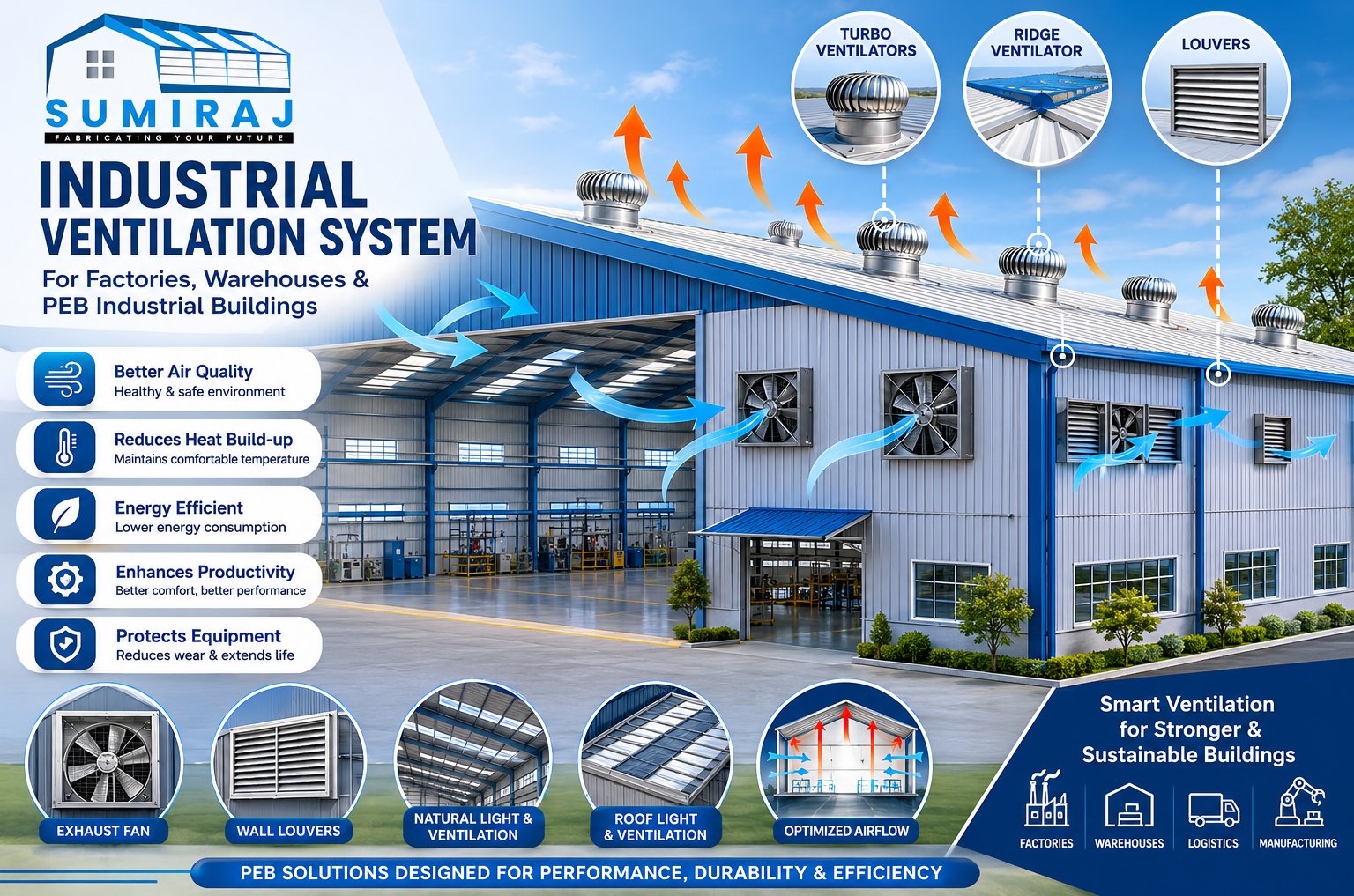
Industrial Ventilation System for Factories & Warehouses: Complete Guide for Industrial Buildings in India
Introduction
An efficient industrial ventilation system is one of the most critical components of any modern industrial facility. Whether it is a manufacturing plant, warehouse, logistics hub, processing unit, or industrial shed, proper ventilation directly impacts employee productivity, equipment performance, energy efficiency, and overall operational safety.
As industries across India continue to expand, factory owners and warehouse developers are increasingly focusing on creating healthier and more sustainable working environments. A well-designed ventilation system helps regulate temperature, remove contaminants, improve air circulation, and maintain compliance with workplace safety standards.
For businesses planning a new PEB industrial building or upgrading an existing facility, investing in the right ventilation strategy can deliver significant long-term benefits.
In this guide, Sumiraj explains everything you need to know about industrial ventilation systems, including their benefits, types, cost considerations, and best practices for industrial facilities in India.
What Is an Industrial Ventilation System?
An industrial ventilation system is a combination of equipment and design elements that control airflow inside industrial buildings. Its primary purpose is to remove heat, dust, fumes, moisture, smoke, and airborne contaminants while supplying fresh air to maintain a safe and comfortable working environment.
Industrial ventilation systems are widely used in:
Manufacturing plants
Warehouses
Logistics centers
Engineering workshops
Automotive facilities
Food processing units
Pharmaceutical plants
Textile industries
Steel fabrication units
When integrated into a pre-engineered building ventilation design, these systems contribute significantly to operational efficiency and building performance.
Why Industrial Ventilation Is Essential for Modern Industrial Buildings
Industrial facilities generate substantial amounts of heat and airborne pollutants during daily operations. Without proper ventilation, businesses may face:
Excessive indoor temperatures
Poor air quality
Reduced employee productivity
Equipment overheating
Increased maintenance costs
Higher energy consumption
Regulatory compliance issues
A professionally designed factory ventilation system ensures consistent airflow and helps maintain optimal indoor conditions throughout the year.
Types of Industrial Ventilation Systems
1. Natural Ventilation Systems
Natural ventilation relies on wind movement and temperature differences to circulate air through the building.
Common features include:
Ridge ventilators
Turbo ventilators
Louvers
Ventilated roof systems
Wall openings
Advantages
Lower operating costs
Minimal maintenance
Environmentally friendly
Energy efficient
Many modern PEB industrial buildings incorporate natural ventilation strategies during the design phase.
2. Mechanical Ventilation Systems
Mechanical ventilation uses powered equipment to move air throughout the facility.
Examples include:
Exhaust fans
Air handling units
Industrial blowers
Duct systems
Air extraction systems
This approach is often suitable for facilities with high heat loads or specialized production environments.
3. Hybrid Ventilation Systems
Hybrid systems combine natural and mechanical ventilation methods.
Benefits include:
Improved airflow control
Reduced energy consumption
Enhanced indoor comfort
Better operational flexibility
Many large warehouses and manufacturing plants prefer hybrid ventilation solutions due to their balance of efficiency and performance.
Key Components of an Industrial Ventilation System
A successful industrial ventilation solution typically includes several integrated components.
Roof Ventilators
Roof ventilators remove hot air that naturally rises toward the ceiling.
Benefits:
Reduced indoor temperatures
Lower cooling requirements
Improved air circulation
Louvers
Louvers allow fresh air to enter the facility while preventing rainwater intrusion.
Exhaust Fans
Industrial exhaust fans remove contaminated air, dust, fumes, and excess heat.
Ridge Ventilation Systems
These systems continuously expel hot air from the building's highest point.
Air Inlets
Properly positioned air inlets maintain balanced airflow throughout the facility.
Benefits of Installing an Industrial Ventilation System
Improved Employee Health and Safety
Proper ventilation reduces exposure to:
Dust
Smoke
Chemical fumes
Excess humidity
This creates a safer and healthier workplace.
Enhanced Productivity
Comfortable working conditions help employees remain focused and productive throughout the day.
Reduced Heat Build-Up
Industrial operations often generate significant heat.
A quality factory ventilation system removes trapped hot air and stabilizes indoor temperatures.
Better Equipment Performance
Excessive heat can negatively affect machinery performance and lifespan.
Ventilation helps protect valuable equipment investments.
Energy Savings
A properly designed energy-efficient ventilation system reduces dependence on air conditioning and mechanical cooling.
Regulatory Compliance
Many industries must meet workplace health and safety requirements related to air quality and ventilation.
Industrial Ventilation System for Warehouses
Modern warehouses require specialized ventilation strategies due to:
Large floor areas
High roof elevations
Continuous material movement
Storage of temperature-sensitive goods
A well-designed warehouse ventilation system helps:
Control humidity
Reduce heat accumulation
Protect inventory
Improve worker comfort
Lower operating costs
For logistics parks and distribution centers, ventilation should be considered during the initial building design phase.
Industrial Ventilation System in Noida
Businesses searching for an industrial ventilation system in Noida often require solutions tailored to local climatic conditions, operational requirements, and industrial processes.
Whether developing a manufacturing facility, logistics center, or warehouse, selecting the right industrial ventilation solutions in Noida can significantly improve building performance and operational efficiency.
A professionally engineered warehouse ventilation system in Noida or factory ventilation system in Noida ensures long-term value while supporting workplace safety and energy savings.
Best Practices for Industrial Ventilation Design
Conduct a Detailed Site Assessment
Every industrial facility has unique ventilation requirements.
Factors to evaluate include:
Building size
Production processes
Occupancy levels
Heat generation
Local climate
Integrate Ventilation During Building Design
The best results are achieved when ventilation is incorporated during the planning stage of a PEB industrial building.
Optimize Roof Design
Proper roof geometry can improve natural airflow and ventilation performance.
Balance Air Intake and Exhaust
An effective ventilation system must maintain balanced airflow to prevent pressure-related issues.
Choose Durable Components
Industrial environments require high-quality materials that can withstand continuous operation.
Cost Considerations for Industrial Ventilation Systems
Several factors influence the cost of an industrial ventilation system.
Building Size
Larger facilities typically require more extensive ventilation infrastructure.
Type of Ventilation System
Costs vary between:
Natural ventilation systems
Mechanical ventilation systems
Hybrid ventilation systems
Industry Requirements
Industries generating dust, fumes, or heat may require specialized equipment.
Roof and Structural Design
The design of the industrial building directly impacts ventilation planning and installation costs.
Energy Efficiency Goals
Higher-efficiency systems may involve greater upfront investment but provide substantial long-term savings.
For accurate budgeting, businesses should consult experienced PEB manufacturers during project planning.
Why Choose Sumiraj for Industrial Buildings and Ventilation-Ready PEB Solutions?
Sumiraj is a trusted name in India's pre-engineered building industry, delivering high-performance industrial infrastructure solutions tailored to modern business requirements.
What Sets Sumiraj Apart?
Expertise in PEB manufacturing and supply
Customized industrial building solutions
Optimized ventilation-ready designs
Advanced engineering capabilities
Quality-focused manufacturing processes
Cost-effective project execution
Timely delivery and installation support
Strong focus on operational efficiency
Our team works closely with clients to develop industrial facilities that support productivity, sustainability, and long-term business growth.
Whether you require a manufacturing plant, warehouse, logistics hub, or industrial shed, Sumiraj delivers solutions designed for superior performance.
Frequently Asked Questions (FAQs)
1. What is an industrial ventilation system?
An industrial ventilation system controls airflow inside industrial facilities by removing heat, contaminants, dust, fumes, and excess moisture while supplying fresh air.
2. Why is ventilation important in warehouses?
Ventilation improves air quality, protects inventory, reduces heat buildup, and creates a more comfortable environment for workers.
3. What is the difference between natural and mechanical ventilation?
Natural ventilation uses airflow generated by wind and temperature differences, while mechanical ventilation relies on powered equipment such as fans and blowers.
4. Can ventilation reduce energy costs?
Yes. A properly designed energy-efficient ventilation system can significantly reduce cooling requirements and operating expenses.
5. How does ventilation improve employee productivity?
Comfortable temperatures and improved air quality help employees work more efficiently and safely.
6. Is ventilation important for PEB industrial buildings?
Absolutely. Proper ventilation enhances building performance, reduces maintenance issues, and supports long-term operational efficiency.
7. When should ventilation planning be considered?
Ventilation should ideally be incorporated during the early design stage of industrial building development.
Conclusion
A properly designed industrial ventilation system is essential for modern factories, warehouses, logistics facilities, and manufacturing plants. From improving air quality and worker comfort to reducing energy consumption and protecting equipment, ventilation plays a vital role in industrial success.
When integrated into a well-engineered PEB structure, the right ventilation solution can significantly enhance building performance, operational efficiency, and long-term return on investment.
For businesses planning new industrial infrastructure, partnering with an experienced PEB manufacturer ensures that ventilation, structural design, and operational requirements work together seamlessly.
Contact Sumiraj Today
Planning a factory, warehouse, logistics center, or industrial building project?
Contact Sumiraj today via WhatsApp or phone call to discuss your project requirements and discover customized PEB solutions designed for maximum performance, durability, and efficiency.
Newsletter Subscription
Subscribe to our updates and stay informed about the latest trends, innovations, and cost-saving solutions in PEB construction, industrial buildings, and warehouse development.