
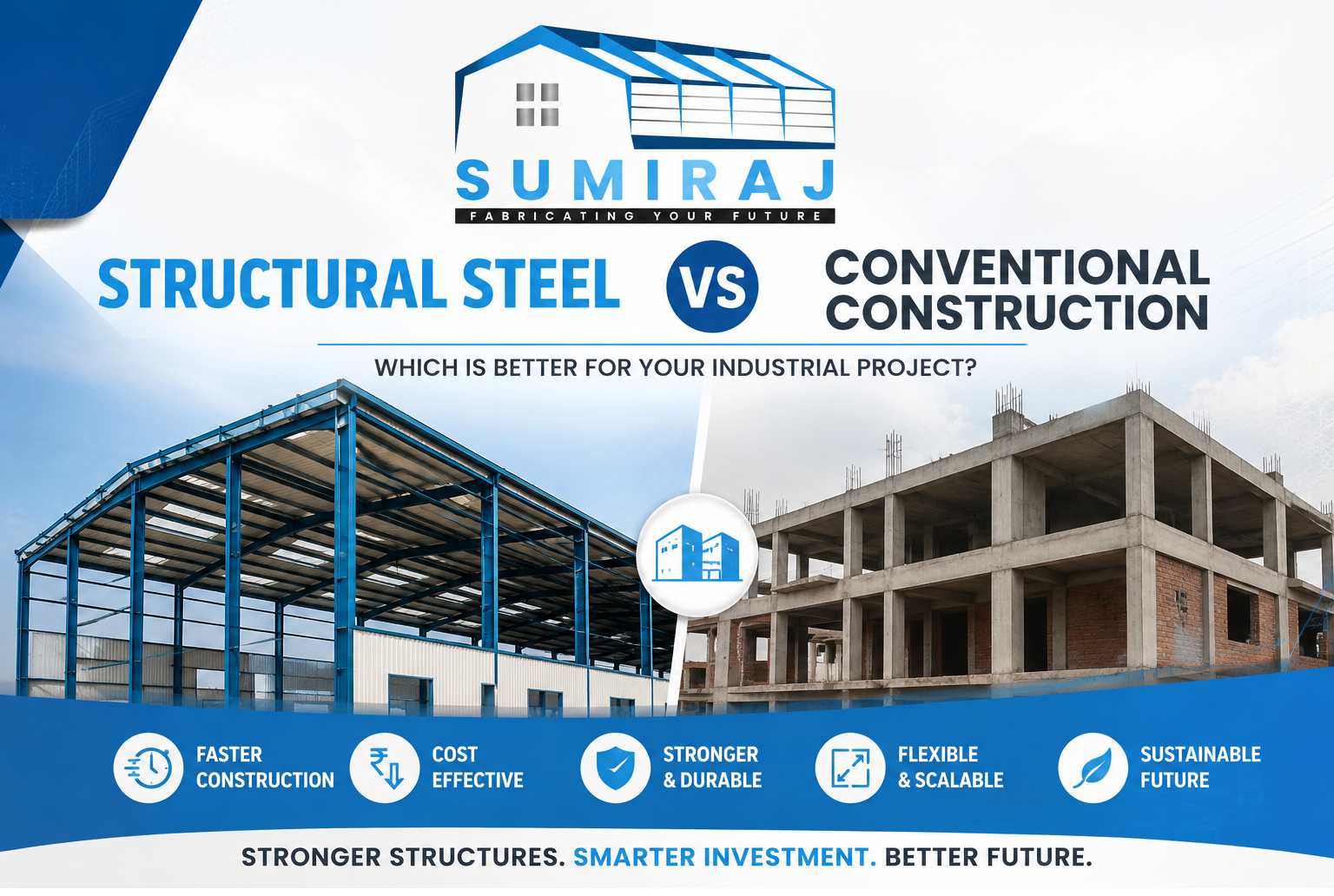
Structural Steel vs Conventional Construction: Which is Better for Industrial Projects in India?
Introduction
When planning a factory, warehouse, logistics hub, manufacturing facility, or industrial shed, one of the most critical decisions is choosing the right construction method. The debate around Structural Steel vs Conventional Construction has become increasingly important as businesses seek faster project completion, lower lifecycle costs, and higher operational efficiency.
For industrial and commercial developments across India, structural steel construction is rapidly emerging as the preferred alternative to conventional brick-and-concrete buildings. Modern businesses require scalable, durable, and cost-effective infrastructure that can adapt to future growth without significant reconstruction expenses.
Whether you are developing a manufacturing unit, warehouse, logistics center, processing plant, or industrial shed, understanding the differences between these construction methods can help you make an informed investment decision.
This guide explores the key differences, advantages, costs, and practical considerations of Structural Steel vs Conventional Construction, helping Indian businesses choose the best solution for long-term success.
Understanding Structural Steel Construction
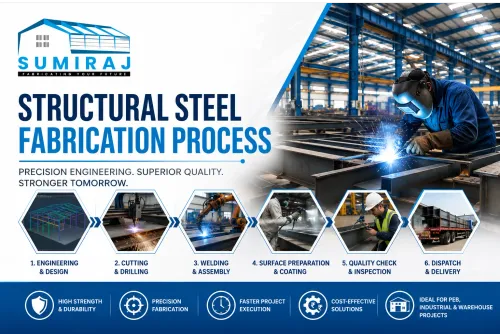
Structural steel construction involves the use of engineered steel components fabricated in a manufacturing facility and assembled on-site. This approach is widely used in:
Pre Engineered Buildings (PEBs)
Industrial Building Construction
Warehouse Construction
Manufacturing Plants
Logistics Centers
Commercial Steel Structures
Aircraft Hangars
Cold Storage Facilities
Steel components are designed using advanced engineering software, ensuring precision, consistency, and superior structural performance.
What is Conventional Construction?
Conventional construction typically relies on:
Reinforced Cement Concrete (RCC)
Brick masonry
Sand and aggregate
Cast-in-place construction methods
This method has been widely used for residential and commercial projects for decades. However, for industrial applications requiring large clear spans, quick completion, and future expansion, conventional construction often faces limitations.
Structural Steel vs Conventional Construction: Key Differences
Construction Speed
Structural Steel Construction
Steel components are fabricated off-site while site preparation continues simultaneously.
Benefits include:
Faster project execution
Reduced construction delays
Minimal weather dependency
Earlier business operations
Project completion can often be achieved 30%–50% faster than traditional methods.
Conventional Construction
Conventional projects require sequential activities such as:
Excavation
Foundation work
Brickwork
Concrete curing
Finishing activities
These stages increase overall project duration and delay operational readiness.
Strength and Durability
Structural Steel Construction
Structural steel offers:
High strength-to-weight ratio
Excellent load-bearing capacity
Better seismic performance
Long service life
Consistent quality control
Steel structures can withstand demanding industrial environments and heavy operational loads.
Conventional Construction
Concrete structures provide durability but may experience:
Cracking over time
Moisture-related issues
Higher maintenance requirements
Reduced flexibility for modifications
Design Flexibility
One major advantage in the Structural Steel vs Conventional Construction comparison is design flexibility.
Steel Structures
Ideal for:
Large span warehouses
Manufacturing units
Distribution centers
Industrial sheds
Advantages include:
Column-free spaces
Easy expansion
Flexible layouts
Future modifications
Conventional Structures
Often constrained by:
Load-bearing walls
Larger structural members
Limited future expansion options
Space Utilization
Industrial businesses need maximum usable floor area.
Structural steel allows:
Wider spans
Fewer columns
Better equipment placement
Improved workflow efficiency
This is especially valuable in:
Warehouse Construction
Industrial Building Construction
Logistics facilities
Cost Considerations: Structural Steel vs Conventional Construction
Initial Construction Cost
Many investors assume conventional construction is cheaper. However, the complete financial picture tells a different story.
Factors influencing steel building costs include:
Steel prices
Building size
Span requirements
Location
Design complexity
Although the upfront cost may appear comparable, structural steel often delivers greater overall value.
Lifecycle Cost Advantages of Steel Buildings
Structural steel buildings typically offer:
Faster return on investment
Lower maintenance costs
Reduced labor expenses
Better operational efficiency
Lower renovation costs
For industrial projects, lifecycle savings can significantly outweigh initial investment differences.
Reduced Construction Time Saves Money
Faster project completion means:
Earlier production start
Faster revenue generation
Reduced financing costs
Lower labor expenses
This factor alone often makes structural steel the preferred choice for industrial investors.
Benefits of Structural Steel Construction
1. Faster Project Delivery
Prefabrication significantly shortens construction schedules.
2. Higher Quality Control
Manufacturing under controlled factory conditions ensures:
Precision fabrication
Consistent quality
Reduced site errors
3. Environmentally Friendly
Steel is highly recyclable and supports sustainable construction practices.
4. Easy Future Expansion
Industrial businesses frequently grow.
Steel structures allow:
Additional bays
Building extensions
Layout modifications
without major demolition work.
5. Better Seismic Performance
India has several earthquake-prone regions.
Steel structures offer:
Greater flexibility
Better energy absorption
Improved safety
6. Lower Maintenance Costs
Modern coatings and engineering techniques enhance durability and reduce maintenance requirements.
Why Warehouses and Factories Prefer Steel Structures
Today's logistics and manufacturing sectors require infrastructure that supports:
Automation
Material handling systems
High storage capacities
Operational flexibility
This explains the growing demand for:
Steel Structure Buildings
Warehouse Construction
Commercial Steel Structures
Industrial Shed Construction
Across India, businesses are increasingly choosing structural steel solutions to meet these requirements efficiently.
Structural Steel vs Conventional Construction in Lucknow
Businesses evaluating Structural Steel vs Conventional Construction in Lucknow should consider factors such as project timelines, expansion plans, operational requirements, and long-term costs.
Modern industrial developments increasingly favor:
Pre Engineered Buildings in Lucknow
Industrial Building Construction in Lucknow
Warehouse Construction in Lucknow
Steel Structure Buildings in Lucknow
Industrial Shed Construction in Lucknow
because of their speed, efficiency, and long-term economic advantages.
For industrial investors and manufacturers seeking scalable infrastructure, steel structures often provide a stronger return on investment compared to conventional alternatives.
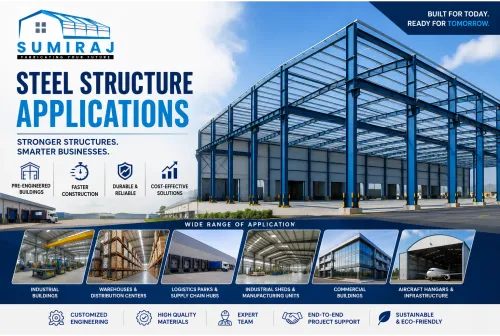
Best Applications for Structural Steel Buildings
Structural steel is particularly suitable for:
Manufacturing Facilities
Production plants
Assembly units
Processing facilities
Warehouses
Distribution centers
Storage facilities
E-commerce fulfillment centers
Logistics Infrastructure
Transport hubs
Freight terminals
Supply chain facilities
Commercial and Industrial Projects
Workshops
Industrial sheds
Commercial Steel Structures
Why Choose Sumiraj?
As a leading PEB manufacturer and supplier, Sumiraj delivers innovative steel building solutions tailored to modern industrial requirements.
What Sets Sumiraj Apart?
Engineering Excellence
Every project is engineered for:
Safety
Efficiency
Durability
Cost optimization
Customized Solutions
We understand that every industrial project has unique operational requirements.
Quality Manufacturing
Advanced fabrication processes ensure:
Precision
Consistency
Structural reliability
Faster Project Execution
Our streamlined processes help clients reduce project timelines and accelerate business operations.
End-to-End Support
From concept to completion, Sumiraj provides comprehensive project support for industrial and commercial developments.
Frequently Asked Questions (FAQs)
1. Is structural steel construction cheaper than conventional construction?
While initial costs may vary, structural steel often delivers lower lifecycle costs due to faster construction, reduced maintenance, and improved operational efficiency.
2. Which construction method is faster?
Structural steel construction is significantly faster because components are prefabricated and assembled on-site.
3. Are steel buildings suitable for warehouses?
Yes. Steel structures are ideal for warehouses due to large clear spans, flexibility, and efficient space utilization.
4. Can steel buildings be expanded later?
Yes. One of the biggest advantages of steel structures is their ability to accommodate future expansion with minimal disruption.
5. Are steel structures durable in Indian weather conditions?
Absolutely. Properly designed and protected steel structures perform exceptionally well across diverse Indian climates.
6. Are steel buildings environmentally friendly?
Yes. Steel is one of the most recyclable construction materials and supports sustainable building practices.
7. What industries benefit most from structural steel construction?
Manufacturing, warehousing, logistics, automotive, food processing, engineering, and industrial sectors benefit significantly from steel construction.
Conclusion
The comparison between Structural Steel vs Conventional Construction clearly demonstrates why modern industrial businesses increasingly prefer steel-based solutions. Faster construction, better space utilization, lower lifecycle costs, easier expansion, and enhanced durability make structural steel a strategic investment for factories, warehouses, logistics hubs, and manufacturing facilities.
For businesses seeking long-term value, operational efficiency, and scalable infrastructure, structural steel construction provides a compelling advantage over traditional construction methods.
Discuss Your Project with Sumiraj
Planning a factory, warehouse, industrial shed, or commercial steel structure?
Connect with Sumiraj today through WhatsApp or a phone call to discuss your project requirements and discover the most efficient steel building solution for your business.
Newsletter Subscription
Subscribe to our updates and stay informed about the latest trends, innovations, and cost-saving solutions in PEB construction, industrial buildings, and warehouse development.