
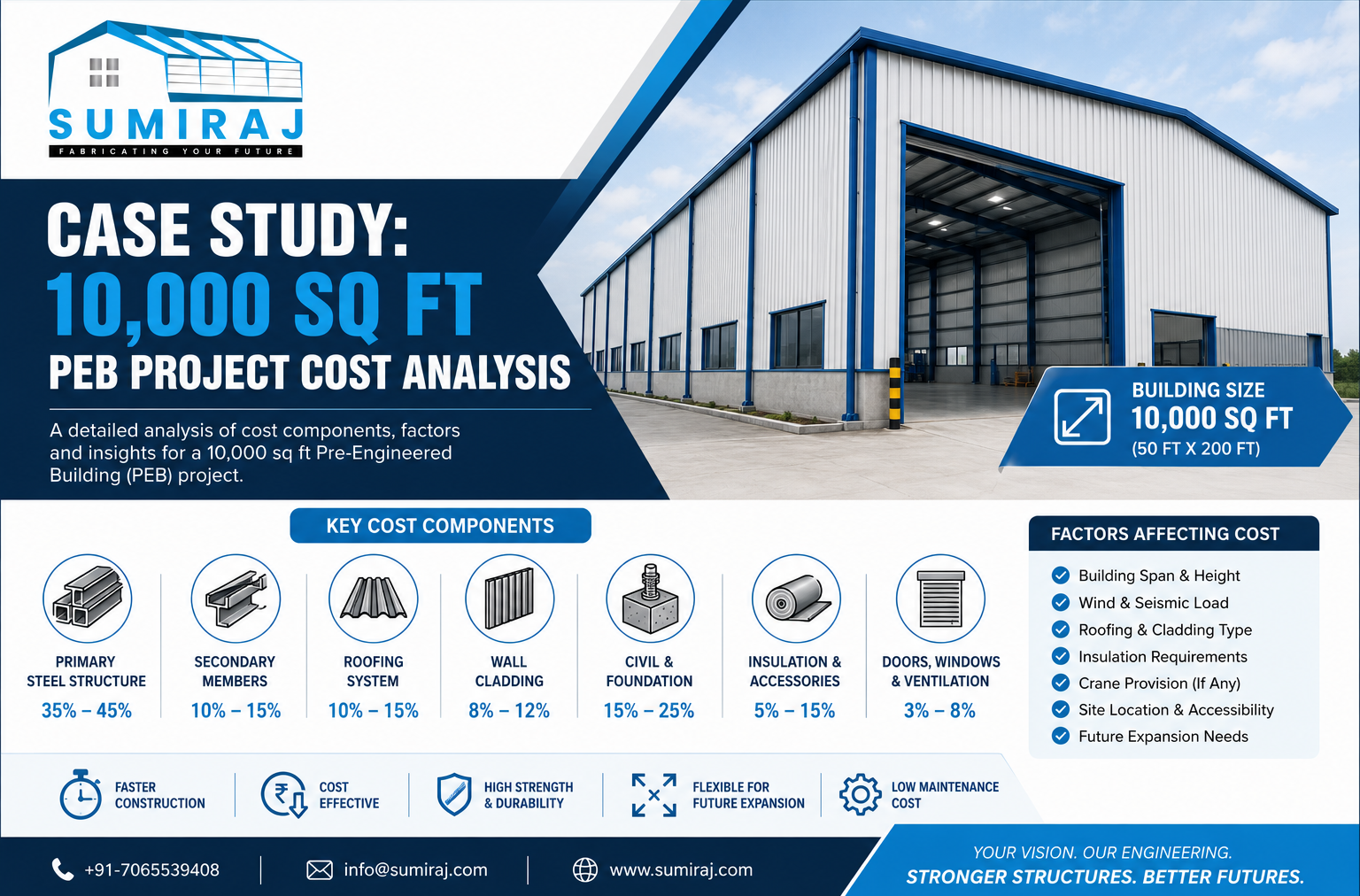
Case Study: 10,000 Sq Ft PEB Project Cost Analysis
Introduction
Pre-Engineered Buildings (PEBs) have become the preferred construction solution for warehouses, manufacturing units, logistics centers, and industrial facilities due to their cost-effectiveness, speed of construction, and long-term durability.
One of the most common questions asked by project owners is: "What is the cost of constructing a 10,000 sq ft PEB building?"
The answer depends on multiple factors, including building dimensions, steel consumption, roofing specifications, insulation requirements, crane provisions, and site conditions.
In this case study, we analyze the major cost components of a typical 10,000 sq ft PEB project and explain the factors that influence the final project budget.
As a leading manufacturer and supplier of Pre-Engineered Buildings, Sumiraj provides customized PEB solutions designed to optimize cost, quality, and performance for industrial and commercial projects across India.
What is a 10,000 Sq Ft PEB Building?
A 10,000 sq ft PEB building is commonly used for:
Industrial sheds
Warehouses
Manufacturing facilities
Logistics centers
Storage units
Commercial workshops
A typical building size may be:
Width: 50 ft
Length: 200 ft
Total Area: 10,000 sq ft
However, dimensions may vary depending on operational requirements.
Key Cost Components of a 10,000 Sq Ft PEB Project
The total project cost is influenced by several major components.
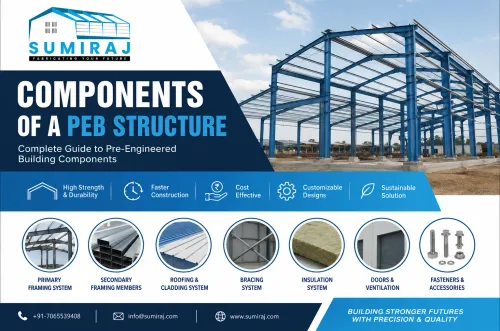
1. Primary Steel Structure
Primary framing includes:
Columns
Rafters
End wall frames
Cost Impact
Primary steel generally accounts for a significant portion of the total structural cost and is designed based on:
Building span
Wind load
Seismic requirements
Crane loading (if applicable)
2. Secondary Framing Members
Secondary members include:
Purlins
Girts
Eave struts
Cost Impact
These components support roofing and wall cladding while enhancing structural stability.
3. Roofing System
The roofing package typically includes:
Color-coated roofing sheets
Ridge caps
Flashings
Fasteners
Optional additions:
Roof insulation
Skylights
Turbo ventilators
Cost Impact
Roofing specifications can significantly affect overall project costs.
4. Wall Cladding System
Wall cladding options include:
Single-skin sheets
Sandwich panels
Insulated wall systems
Cost Impact
Insulated wall systems increase initial investment but improve energy efficiency.
5. Foundation and Civil Work
Civil work generally includes:
Excavation
PCC work
RCC foundations
Anchor bolt installation
Flooring
Cost Impact
Foundation costs vary based on:
Soil conditions
Building loads
Local construction rates
6. Insulation System
Many industrial facilities require insulation for thermal comfort.
Common options:
Rockwool insulation
Glass wool insulation
PUF panels
Cost Impact
Insulation increases initial cost but reduces long-term energy expenses.
7. Accessories and Finishing Items
Additional components may include:
Gutters
Down-take pipes
Louvers
Doors
Rolling shutters
Ventilation systems
These items contribute to project functionality and durability.
Sample Cost Distribution for a 10,000 Sq Ft PEB Project
While actual project costs vary, a typical cost breakdown may resemble:
| Component | Approximate Share of Total Cost |
|---|---|
| Primary Steel Structure | 35–45% |
| Secondary Members | 10–15% |
| Roofing System | 10–15% |
| Wall Cladding | 8–12% |
| Civil Foundations | 15–25% |
| Insulation & Accessories | 5–15% |
The final cost depends on project specifications, location, and material selection.
Factors Affecting the Cost of a 10,000 Sq Ft PEB Building
Building Span
Wider spans require heavier structural sections, increasing steel consumption.
Wind and Seismic Loads
Projects located in higher wind zones or seismic regions require additional structural reinforcement.
Roofing and Cladding Specifications
Premium roofing systems, insulated panels, and specialized coatings increase project costs.
Crane Requirements
The inclusion of EOT cranes significantly impacts structural design and material requirements.
Site Location
Transportation, labor rates, and local regulations affect the overall budget.
Future Expansion Requirements
Buildings designed for future expansion may require additional engineering considerations.
Cost Optimization Strategies
Businesses can reduce construction costs by:
Selecting optimized building dimensions
Choosing appropriate roofing specifications
Using efficient structural designs
Planning future expansion during the design stage
Working with experienced PEB manufacturers
An optimized design can significantly improve project economics without compromising performance.
Benefits of Investing in a PEB Building
Compared to conventional construction methods, PEB buildings offer:
Faster project completion
Reduced steel wastage
Lower construction costs
Better quality control
Longer service life
Easier future expansion
Lower maintenance requirements
These advantages make PEBs an ideal choice for industrial and commercial projects.
Why Choose Sumiraj for Your PEB Project?
At Sumiraj, we specialize in delivering customized Pre-Engineered Building solutions designed to meet the specific needs of our clients.
Our Capabilities Include:
Industrial sheds
Warehouses
Manufacturing facilities
Logistics centers
Commercial steel buildings
Turnkey PEB solutions
Our team focuses on engineering efficiency, quality manufacturing, and timely execution to ensure maximum value for every project.
Conclusion
A 10,000 sq ft PEB project offers an excellent balance of cost, durability, and construction speed. While the final project cost depends on multiple factors, understanding the major cost components helps businesses plan budgets more effectively and make informed investment decisions.
By partnering with an experienced PEB manufacturer like Sumiraj, businesses can achieve optimized designs, reduced construction costs, and long-lasting building performance.
Contact Sumiraj
Planning a warehouse, industrial shed, or commercial steel building?
Get in touch with Sumiraj for customized PEB solutions and expert project guidance.
📞 Phone: +91-7065539408
📧 Email: info@sumiraj.com
Frequently Asked Questions (FAQs)
1. What is the average cost of a 10,000 sq ft PEB building?
The cost depends on structural specifications, roofing systems, insulation requirements, and site conditions. Each project requires detailed engineering for accurate pricing.
2. What factors influence PEB project cost the most?
Building span, steel consumption, wind load, insulation, crane requirements, and location are the primary cost drivers.
3. Is a PEB building cheaper than conventional construction?
In many industrial applications, PEB buildings are often more cost-effective due to reduced construction time and optimized steel usage.
4. How long does it take to complete a 10,000 sq ft PEB project?
Project duration depends on design complexity, fabrication schedules, and site conditions, but PEB projects are generally completed faster than conventional structures.
5. Can a PEB building be expanded later?
Yes. One of the major advantages of PEB construction is the ability to expand the structure with minimal disruption.
6. Does insulation increase project cost?
Yes, insulation increases the initial investment but can reduce energy costs and improve indoor comfort over the long term.
7. Why should I choose Sumiraj for a PEB project?
Sumiraj provides customized PEB solutions, quality manufacturing, expert engineering support, and timely project execution for industrial and commercial buildings.