
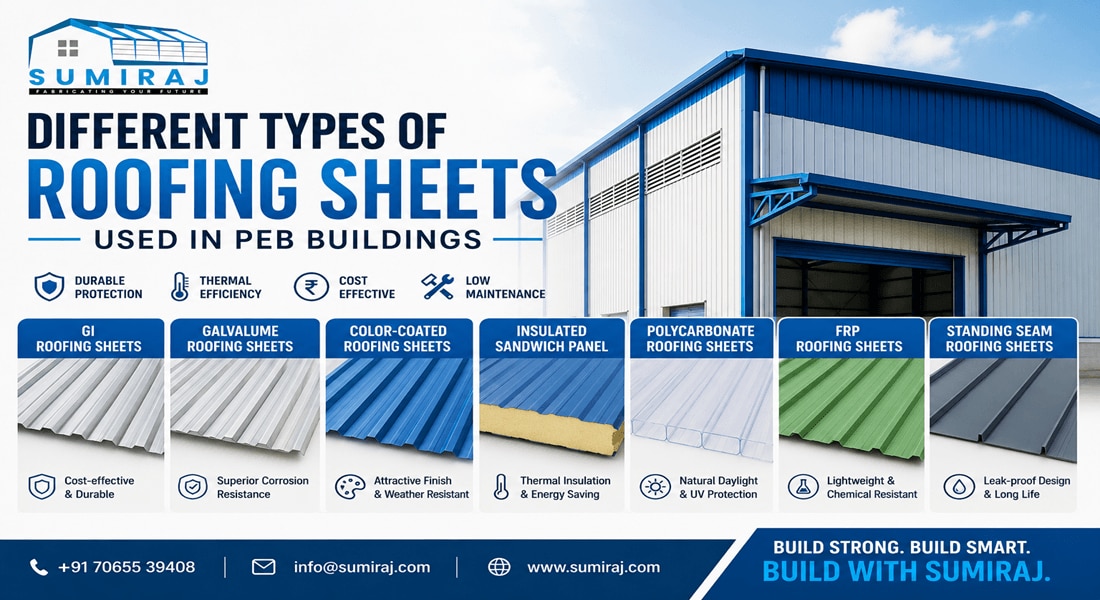
Different Types of Roofing Sheets Used in PEB Buildings
Different Types of Roofing Sheets Used in PEB Buildings: A Complete Guide
When constructing a Pre-Engineered Building (PEB), choosing the right roofing sheet is one of the most important decisions. Roofing sheets play a crucial role in protecting the structure from weather conditions, improving energy efficiency, and increasing the overall lifespan of the building.
Whether it is an industrial warehouse, factory, logistics center, commercial building, or agricultural facility, selecting the appropriate roofing system ensures long-term performance and cost savings.
In this guide, we will explore the different types of roofing sheets used in PEB buildings and their advantages.
Why Roofing Sheets Matter in PEB Structures
Roofing sheets are more than just a covering for the building. They provide:
Protection against rain, wind, and sunlight
Thermal insulation and energy efficiency
Structural durability
Reduced maintenance costs
Enhanced building aesthetics
At Sumiraj, we help clients choose the most suitable roofing solutions based on project requirements, location, and budget.
1. Galvanized Iron (GI) Roofing Sheets
Galvanized Iron (GI) sheets are among the most commonly used roofing materials in PEB construction. These sheets are coated with zinc to prevent rust and corrosion.
Benefits:
Excellent corrosion resistance
Strong and durable
Cost-effective solution
Easy installation
Long service life
Applications:
Warehouses
Manufacturing units
Storage facilities
Agricultural buildings
2. Galvalume Roofing Sheets
Galvalume sheets are coated with a combination of aluminum, zinc, and silicon, offering superior protection compared to standard galvanized sheets.
Benefits:
Better corrosion resistance
High reflectivity reduces heat absorption
Longer lifespan
Suitable for harsh weather conditions
Applications:
Industrial sheds
Coastal-area buildings
Commercial PEB projects
3. Color-Coated Roofing Sheets
Color-coated sheets are manufactured using high-quality steel with protective paint coatings. They provide both functionality and an attractive appearance.
Benefits:
Attractive finish
UV-resistant coating
Reduced maintenance
Available in multiple colors
Improved weather resistance
Applications:
Commercial complexes
Office buildings
Retail facilities
Modern industrial structures
4. Insulated Sandwich Panel Roofing
Sandwich panels consist of two metal sheets with an insulating core such as PUF (Polyurethane Foam), EPS, or Rockwool.
Benefits:
Excellent thermal insulation
Energy savings
Noise reduction
Improved indoor comfort
Enhanced fire resistance (depending on core material)
Applications:
Cold storage facilities
Food processing units
Pharmaceutical plants
Temperature-controlled warehouses
5. Polycarbonate Roofing Sheets
Polycarbonate sheets are lightweight, transparent roofing materials often used to allow natural sunlight into buildings.
Benefits:
High light transmission
Impact resistance
Lightweight construction
UV protection
Reduced daytime lighting costs
Applications:
Skylights
Walkways
Commercial buildings
Industrial sheds requiring daylighting
6. FRP (Fiber Reinforced Plastic) Roofing Sheets
FRP sheets are composite materials known for their strength and corrosion resistance.
Benefits:
Lightweight
Chemical-resistant
Corrosion-resistant
Good light transmission
Durable performance
Applications:
Chemical plants
Industrial facilities
Warehouses
Manufacturing units
7. Standing Seam Roofing Sheets
Standing seam roofing systems feature concealed fasteners and raised seams, offering superior waterproofing and aesthetics.
Benefits:
Leak-resistant design
Modern appearance
Reduced maintenance
Excellent weather performance
Long lifespan
Applications:
Premium industrial projects
Commercial buildings
Large-span PEB structures
Factors to Consider When Choosing Roofing Sheets
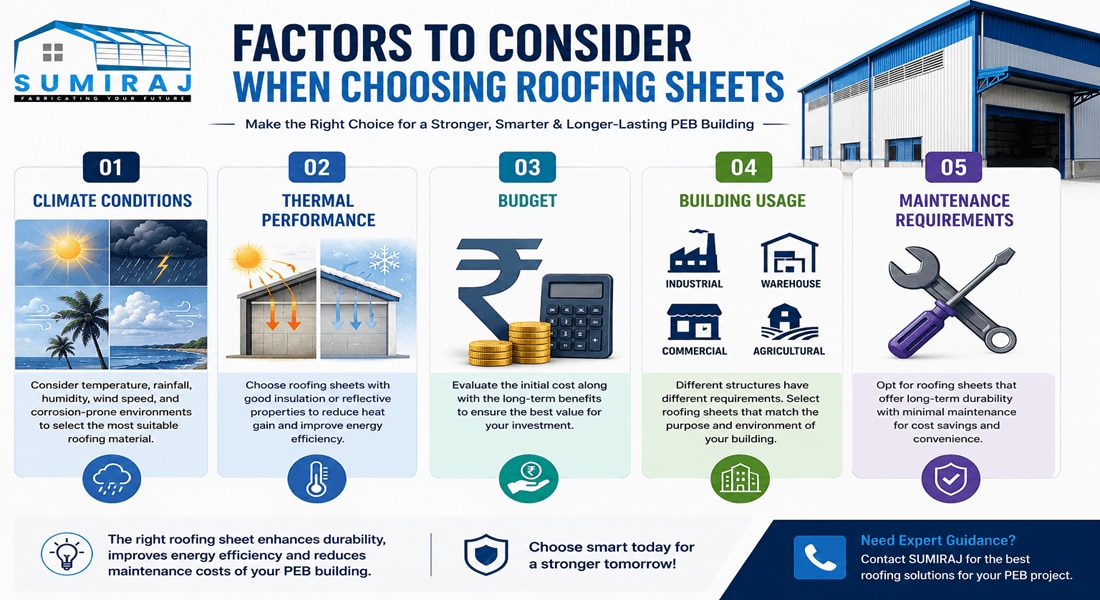
Before selecting roofing sheets for your PEB project, consider:
Climate Conditions
Areas with heavy rainfall, extreme heat, or coastal exposure require specialized roofing materials.
Thermal Performance
Insulated roofing systems can significantly reduce cooling costs.
Budget
Different roofing options offer varying levels of performance and investment requirements.
Building Usage
Industrial, commercial, warehouse, and agricultural structures have different roofing needs.
Maintenance Requirements
Choose materials that offer long-term durability with minimal upkeep.
Which Roofing Sheet is Best for PEB Buildings?
The best roofing sheet depends on your project's specific requirements:
For affordability: GI Roofing Sheets
For corrosion resistance: Galvalume Sheets
For aesthetics: Color-Coated Sheets
For energy efficiency: Sandwich Panels
For natural lighting: Polycarbonate Sheets
For chemical environments: FRP Sheets
For premium performance: Standing Seam Roofing
Consulting experienced PEB professionals can help ensure the right selection for maximum durability and cost-effectiveness.
Conclusion
Roofing sheets are a critical component of any Pre-Engineered Building. Selecting the right type can improve durability, energy efficiency, aesthetics, and overall building performance. From galvanized and galvalume sheets to insulated panels and standing seam roofing systems, each option offers unique advantages.
At Sumiraj, we provide customized PEB solutions tailored to the specific needs of industrial, commercial, warehouse, and infrastructure projects. Our team helps clients choose the most suitable roofing systems for long-lasting performance and value.
Get Expert PEB Roofing Solutions
Planning a new PEB project or upgrading an existing structure?
Contact Sumiraj today for expert guidance on roofing systems, PEB design, fabrication, and installation.
📞 Phone: +91-7065539408
📧 Email: info@sumiraj.com
Let Sumiraj help you build stronger, more efficient, and future-ready structures.
