
PEB vs Prefabricated Buildings: Which Construction Solution is Right for Your Project?
Introduction
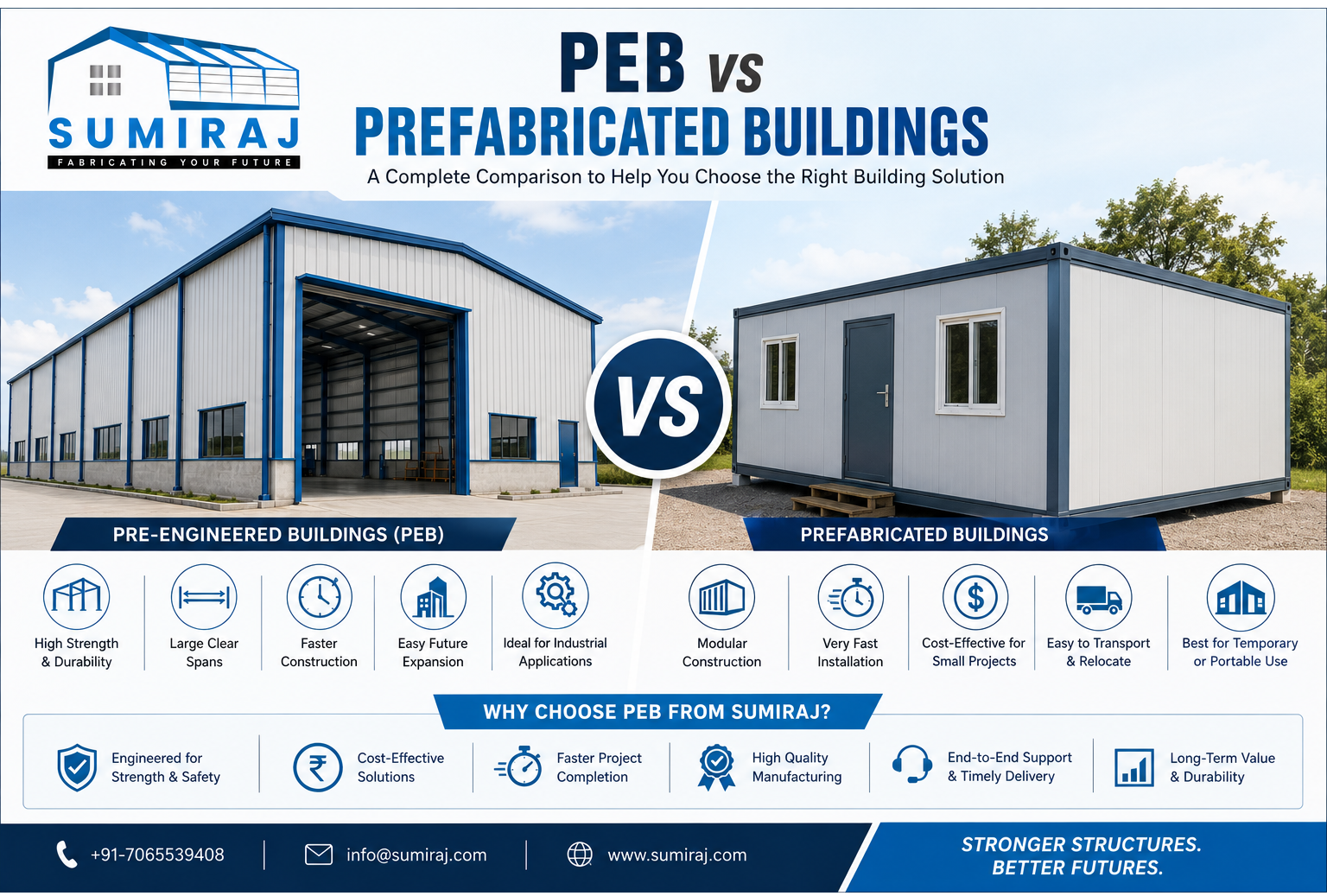
Modern construction methods are rapidly replacing traditional building techniques due to their speed, efficiency, and cost-effectiveness. Among the most popular options are Pre-Engineered Buildings (PEBs) and Prefabricated Buildings.
While both construction systems offer faster project completion compared to conventional construction, they differ significantly in design, structural systems, applications, and long-term performance.
Understanding these differences is essential for selecting the right solution for warehouses, factories, commercial buildings, site offices, labor accommodations, and infrastructure projects.
As a leading manufacturer and supplier of Pre-Engineered Buildings, Sumiraj provides customized PEB solutions designed to deliver strength, durability, and cost efficiency for industrial and commercial applications.
In this article, we compare PEB vs Prefabricated Buildings to help you make an informed decision.
What is a Pre-Engineered Building (PEB)?
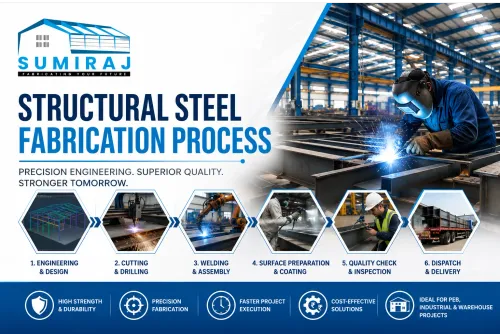
A Pre-Engineered Building is a steel structure designed using advanced engineering software and manufactured in a controlled factory environment before being assembled at the project site.
A typical PEB consists of:
Primary steel framing
Secondary framing members
Roofing systems
Wall cladding systems
Bracing systems
Insulation solutions
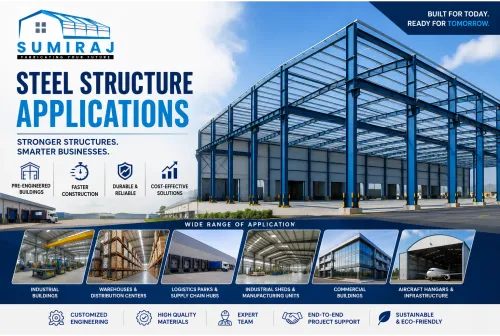
PEBs are commonly used for:
Industrial sheds
Warehouses
Manufacturing plants
Logistics centers
Commercial buildings
Aircraft hangars
What is a Prefabricated Building?
A Prefabricated Building is a structure whose components are manufactured off-site and assembled at the project location.
Prefabricated buildings may use:
Steel
Concrete
Wood
Composite materials
Common applications include:
Site offices
Portable cabins
Modular offices
Worker accommodations
Temporary structures
Educational facilities
Healthcare units
Prefabrication focuses on modular construction and ease of transportation.
PEB vs Prefabricated Buildings: Key Differences
1. Structural Design
PEB
PEBs are engineered specifically for each project based on:
Span requirements
Wind loads
Seismic loads
Future expansion requirements
Prefabricated Buildings
Prefabricated structures often use standardized modular designs with limited customization.
Winner
PEB, for large-scale industrial and commercial applications.
2. Load-Bearing Capacity
PEB
PEBs are designed to support:
Heavy equipment
Overhead cranes
Industrial operations
Large clear spans
Prefabricated Buildings
Most prefabricated buildings are intended for lighter loads and temporary or semi-permanent use.
Winner
PEB
3. Building Span Capability
PEB
Can achieve large clear spans without internal columns.
This is particularly beneficial for:
Warehouses
Manufacturing facilities
Logistics centers
Prefabricated Buildings
Generally have smaller spans and may require additional supports.
Winner
PEB
4. Construction Speed
PEB
Fast fabrication and installation significantly reduce project timelines.
Prefabricated Buildings
Modular systems can often be installed even faster for smaller structures.
Winner
Prefabricated Buildings for small modular projects.
5. Durability and Lifespan
PEB
PEBs are designed for long-term industrial use and can provide decades of service with proper maintenance.
Prefabricated Buildings
Lifespan varies based on materials and intended usage.
Winner
PEB
6. Customization Options
PEB
Offers extensive customization in:
Building dimensions
Roofing systems
Cladding systems
Crane provisions
Mezzanine floors
Prefabricated Buildings
Customization is often limited by module sizes and transportation constraints.
Winner
PEB
7. Cost Efficiency
PEB
Provides excellent value for large industrial projects due to optimized steel usage.
Prefabricated Buildings
Can be economical for smaller modular applications.
Winner
Depends on project size and requirements.
8. Future Expansion
PEB
Expansion can be planned during the design stage and executed with minimal disruption.
Prefabricated Buildings
Expansion is possible but may be constrained by modular layouts.
Winner
PEB
Quick Comparison Table
| Feature | PEB | Prefabricated Building |
|---|---|---|
| Structural Strength | High | Moderate |
| Large Clear Spans | Excellent | Limited |
| Industrial Applications | Excellent | Limited |
| Construction Speed | Fast | Very Fast |
| Customization | Extensive | Moderate |
| Crane Integration | Possible | Limited |
| Long-Term Durability | Excellent | Depends on Material |
| Future Expansion | Easy | Moderate |
| Best for Warehouses | Yes | No |
| Best for Temporary Buildings | No | Yes |
When Should You Choose a PEB?
A PEB is the ideal choice when your project requires:
Large clear spans
Industrial operations
Heavy machinery
Overhead cranes
Long-term durability
Future expansion flexibility
Typical examples include:
Warehouses
Manufacturing plants
Distribution centers
Industrial sheds
Logistics hubs
When Should You Choose a Prefabricated Building?
A prefabricated building may be suitable when you need:
Temporary facilities
Portable offices
Worker accommodations
Modular classrooms
Small commercial spaces
These structures are often selected when rapid deployment is the primary requirement.
Benefits of Choosing a PEB Structure
Businesses increasingly prefer PEBs because they offer:
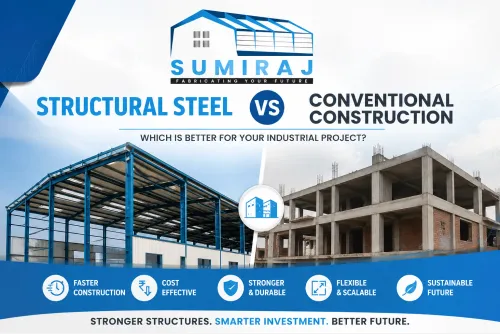
Faster construction compared to conventional buildings
Optimized steel consumption
Lower maintenance requirements
Better structural performance
Energy-efficient insulation options
Easy future expansion
Long service life
Why Choose Sumiraj for PEB Solutions?
Sumiraj is a trusted manufacturer and supplier of Pre-Engineered Building systems for industrial and commercial projects.
Our Expertise Includes:
Industrial sheds
Warehouses
Manufacturing facilities
Commercial steel buildings
Logistics centers
Turnkey PEB solutions
We combine engineering expertise, quality manufacturing, and timely project execution to deliver reliable and cost-effective PEB structures.
Conclusion
Both PEBs and Prefabricated Buildings offer significant advantages over traditional construction methods. However, the right choice depends on the intended application, structural requirements, budget, and long-term goals.
For industrial facilities, warehouses, manufacturing plants, and large commercial structures, Pre-Engineered Buildings generally provide superior strength, flexibility, and long-term value.
If you are planning a new industrial or commercial project, Sumiraj can help you select and design the most suitable PEB solution for your requirements.
Contact Sumiraj
Looking for a reliable PEB manufacturer and supplier?
Contact Sumiraj for customized Pre-Engineered Building solutions.
📞 Phone: +91-7065539408
📧 Email: info@sumiraj.com
Frequently Asked Questions (FAQs)
1. What is the difference between a PEB and a Prefabricated Building?
A PEB is a specially engineered steel structure designed for industrial and commercial applications, while prefabricated buildings are modular structures manufactured off-site and assembled at the project location.
2. Which is stronger: PEB or Prefabricated Building?
PEBs are generally designed for higher structural loads and industrial applications, making them stronger for large-scale projects.
3. Are PEB buildings more expensive than prefabricated buildings?
The cost depends on project size, design requirements, and intended use. PEBs often provide better value for larger industrial projects.
4. Can a PEB building be expanded in the future?
Yes. PEB structures are commonly designed with future expansion in mind.
5. Which is better for warehouses?
PEBs are typically the preferred choice for warehouses due to their large clear spans and high load-bearing capacity.
6. Are prefabricated buildings suitable for permanent use?
Some prefabricated buildings can be used as permanent structures, depending on their design and materials.
7. Why choose Sumiraj for a PEB project?
Sumiraj offers customized PEB solutions, quality manufacturing, expert engineering support, and reliable project execution for industrial and commercial buildings.