
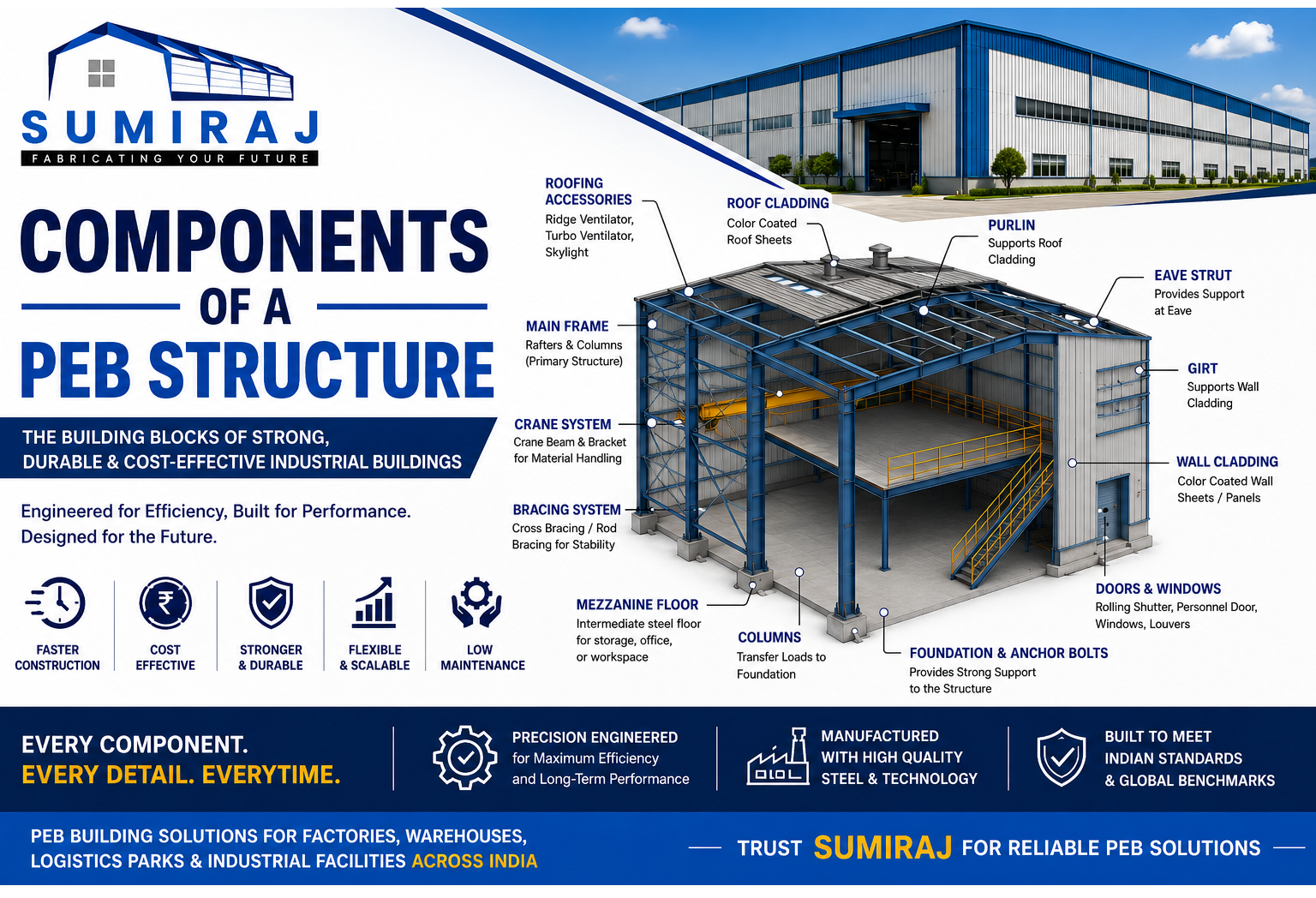
Components of a PEB Structure
As industries across India continue to expand, businesses are increasingly choosing Pre-Engineered Buildings (PEBs) for factories, warehouses, logistics parks, and manufacturing facilities. Their faster construction, cost efficiency, and design flexibility make them a preferred alternative to conventional buildings.
However, the performance and durability of a PEB depend on the quality and engineering of its individual components. Every structural member plays a specific role in ensuring strength, stability, and long-term reliability.
In this guide, we'll explore the Components of a PEB Structure, explain their functions in simple terms, and discuss why choosing a trusted PEB manufacturer like Sumiraj is essential. If you're searching for Components of a PEB Structure in New Delhi, this article will help you understand the building blocks of a high-performance industrial structure.
What Is a PEB Structure?
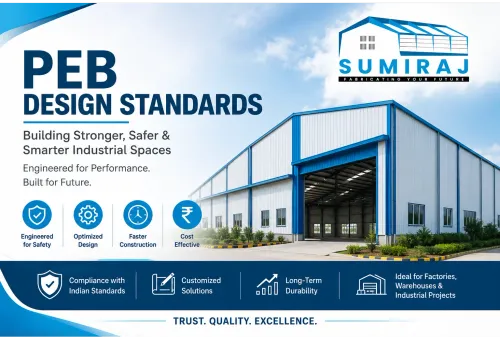
A Pre-Engineered Building (PEB) is a steel building system designed and fabricated in a factory before being transported to the construction site for assembly. Unlike conventional RCC structures, PEBs are engineered for maximum efficiency, reduced construction time, and optimal material utilization.
PEB structures are widely used for:
Industrial factories
Warehouses
Logistics hubs
Manufacturing plants
Commercial buildings
Cold storage facilities
Aircraft hangars
Distribution centers
The strength of every PEB depends on the proper integration of multiple structural and secondary components.
Main Components of a PEB Structure
1. Primary Framing System
The primary framing system is the main load-bearing framework of a PEB structure.
It typically includes:
Built-up columns
Rafters
Rigid frames
These members transfer loads from the roof and walls safely to the building foundation. They are custom-designed based on span, height, wind load, seismic conditions, and crane requirements.
2. Secondary Framing Members
Secondary members provide support to the roof and wall cladding while increasing overall structural stability.
They include:
Purlins
Purlins support roof sheets and distribute roof loads evenly.
Girts
Girts are horizontal members attached to columns that support wall panels.
Eave Struts
Located at the roof-wall junction, eave struts improve structural rigidity and provide support for drainage systems.
3. Roof and Wall Cladding
Cladding protects the building from external weather conditions while improving insulation and aesthetics.
Common cladding materials include:
Galvanized steel sheets
Color-coated steel panels
Sandwich insulated panels
Proper cladding improves durability, energy efficiency, and weather resistance.
4. Bracing System
Bracing enhances the stability of the building by resisting lateral forces caused by wind or earthquakes.
Common bracing components include:
Cross bracing
Rod bracing
Portal bracing
Flange bracing
An efficient bracing system ensures structural integrity under varying environmental conditions.
5. Crane Support System
Industrial facilities often require overhead cranes for material handling.
PEB structures can be designed with:
Crane brackets
Crane beams
Runway beams
These components safely transfer crane loads to the primary frame without affecting building performance.
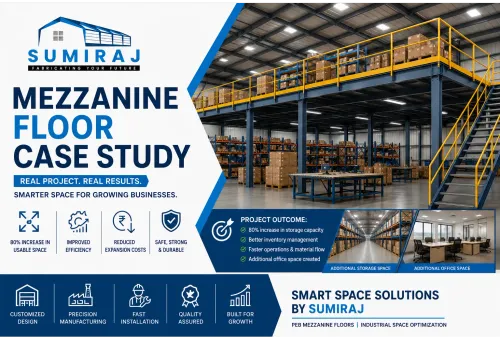
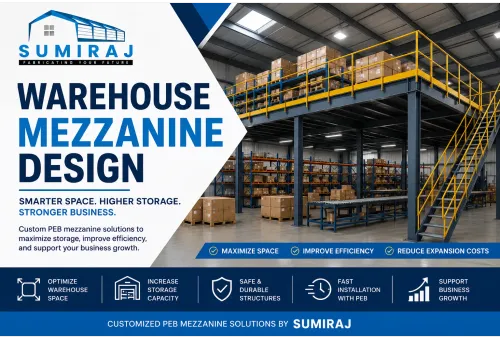
6. Mezzanine Floor System
Many industrial buildings include a steel mezzanine floor to maximize vertical space.
Applications include:
Office areas
Inventory storage
Packing stations
Production support
Quality inspection rooms
A mezzanine increases usable floor area without expanding the building footprint.
7. Roofing Accessories
Several accessories improve roof performance and weather protection.
These include:
Ridge ventilators
Turbo ventilators
Skylights
Gutters
Downpipes
Roof monitors
Together, these components improve ventilation, natural lighting, and rainwater management.
8. Doors and Windows
Industrial buildings require specialized openings for operational efficiency.
Typical options include:
Rolling shutters
Sliding doors
Personnel doors
Louvers
Aluminium windows
Ventilation windows
Proper placement improves accessibility, ventilation, and safety.
9. Fasteners and Connection Systems
Even the strongest steel members depend on reliable connections.
High-strength bolts, anchor bolts, self-drilling screws, and welded joints ensure every component works together as a single structural system.
Precision fastening improves structural safety and simplifies installation.
Benefits of Understanding the Components of a PEB Structure
Knowing the major components helps businesses make informed investment decisions.
Better Quality Assessment
Understanding each component allows buyers to evaluate the quality of materials and workmanship before selecting a PEB supplier.
Improved Structural Performance
Properly engineered components distribute loads efficiently, improving the building's strength and service life.
Faster Construction
Since PEB components are fabricated in a controlled manufacturing environment, on-site installation is significantly faster than conventional construction.
Lower Maintenance Costs
High-quality structural steel, protective coatings, and precision fabrication reduce maintenance requirements over the building's lifespan.
Future Expansion Flexibility
PEB structures can be expanded by adding additional bays or modifying existing sections with minimal disruption.
Cost Efficiency
Optimized structural design minimizes steel consumption without compromising strength, resulting in lower project costs and improved return on investment.
Businesses searching for Components of a PEB Structure, PEB building components, steel building components, or industrial PEB manufacturers in New Delhi benefit from choosing a manufacturer that delivers engineered, high-quality systems rather than standard fabricated steel.
Why Choose Sumiraj?
At Sumiraj, every PEB structure is engineered with precision to deliver strength, durability, and long-term performance. We combine advanced design software, quality materials, and modern manufacturing processes to create customized solutions for industrial and commercial projects.
Why Industries Choose Sumiraj
Customized PEB designs
High-quality structural steel
Precision fabrication
Experienced engineering team
Compliance with Indian standards
Fast project execution
Durable and low-maintenance structures
End-to-end project support
Solutions for factories, warehouses, logistics parks, and manufacturing facilities
Whether you're constructing a warehouse, factory, logistics hub, or industrial building, Sumiraj delivers PEB solutions designed for efficiency and future growth.
Frequently Asked Questions
1. What are the main components of a PEB structure?
The primary components include primary framing, secondary framing, roof and wall cladding, bracing systems, crane support systems, mezzanine floors, roofing accessories, doors, windows, and fastening systems.
2. Why are secondary members important in a PEB?
Secondary members such as purlins and girts support roof and wall panels while improving the stability of the overall structure.
3. Can a PEB structure include a mezzanine floor?
Yes. A steel mezzanine floor can be integrated into the building design to create additional storage, office, or production space without increasing the building footprint.
Conclusion
Understanding the Components of a PEB Structure helps businesses appreciate how each structural element contributes to the safety, efficiency, and durability of an industrial building. From the primary framing system to roofing accessories and mezzanine floors, every component is engineered to work together for maximum performance.
If you're looking for Components of a PEB Structure in New Delhi, or planning a factory, warehouse, or logistics facility, partnering with an experienced manufacturer is the key to long-term success. Sumiraj delivers customized PEB solutions that combine precision engineering, premium materials, and reliable project execution for industrial businesses across India.
Contact Sumiraj Today
Planning your next industrial building project? Contact Sumiraj via WhatsApp or phone call to discuss your requirements with our experts and discover customized PEB solutions designed for your business.
Subscribe to Our Newsletter
Subscribe to our updates and stay informed about the latest trends, innovations, and cost-saving solutions in PEB construction, industrial buildings, and warehouse development.