
Factors Affecting PEB Building Cost in India (2026 Complete Guide)
Introduction
Pre-Engineered Buildings (PEB) have become the preferred choice for industrial construction in India due to their faster execution, cost efficiency, durability, and design flexibility. From warehouses and factory sheds to logistics parks and commercial buildings, PEB structures are widely used across multiple industries.
One of the most common questions businesses ask before starting a project is:
“What factors affect PEB building cost in India?”
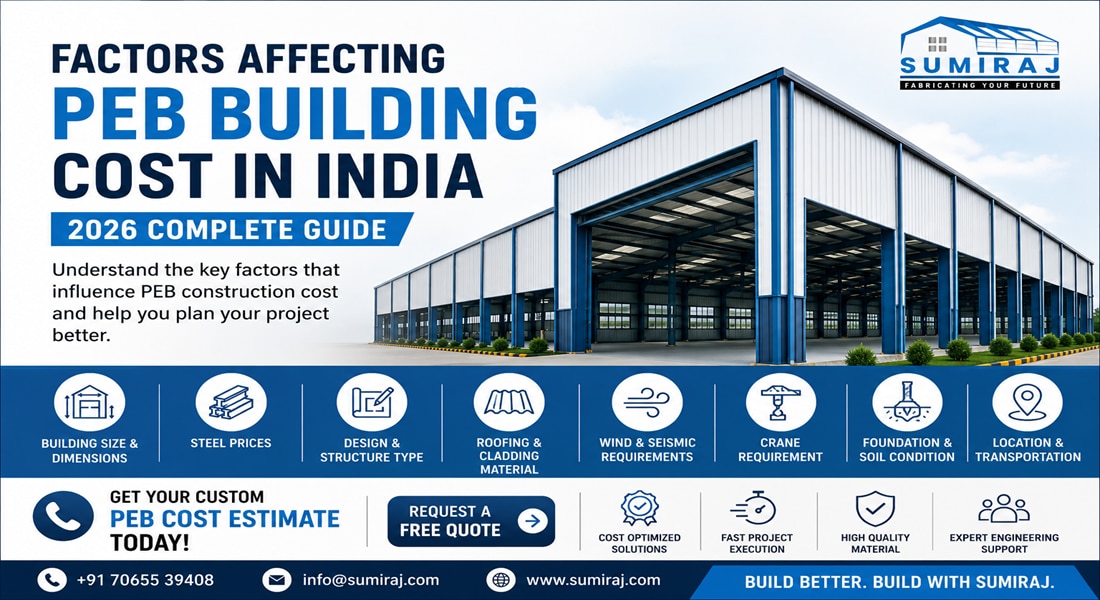
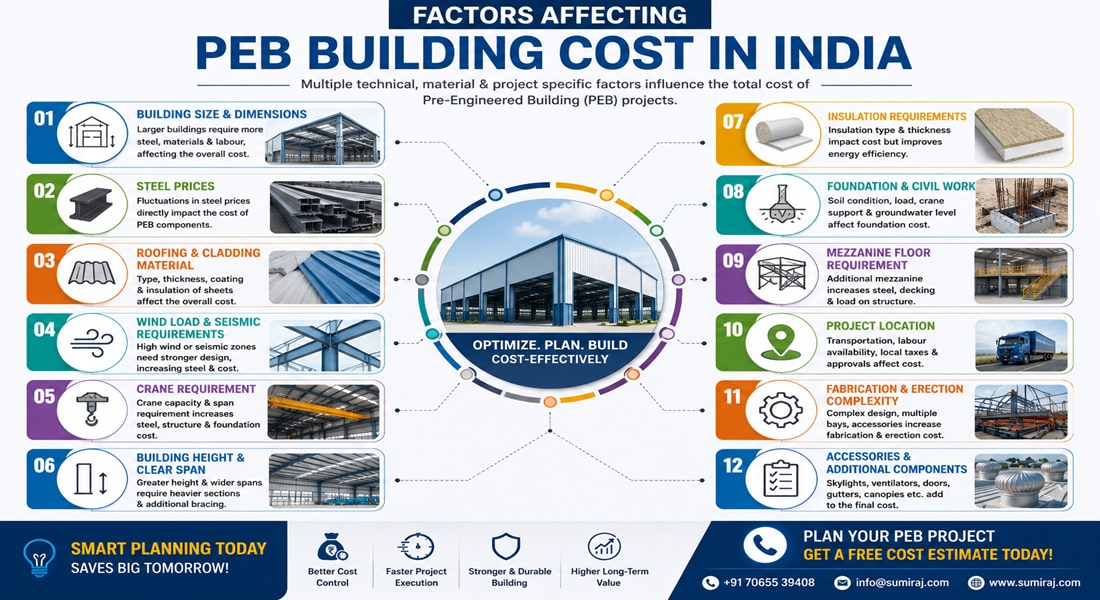
The cost of a PEB structure depends on several factors including building size, steel prices, roofing materials, wind load requirements, crane systems, insulation, and project location.
In this complete 2026 guide, we explain all the major factors that influence PEB warehouse and industrial shed construction costs in India.
1. Building Size and Dimensions
The overall size of the building is one of the biggest cost determinants.
Key dimensions include:
- Building width
- Building length
- Building height
- Total covered area
Larger buildings usually have a lower per-square-foot cost because material utilization becomes more efficient at scale.
Example:
A 5,000 sq ft warehouse may cost more per sq ft than a 50,000 sq ft warehouse.
The building height also significantly affects steel consumption because taller structures require stronger columns and additional bracing.
2. Steel Prices in the Market
Steel is the primary raw material used in PEB structures. Fluctuations in steel prices directly impact project cost.
Main steel components include:
- Primary members
- Secondary members
- Roofing sheets
- Structural accessories
Steel prices in India vary based on:
- Global demand
- Raw material availability
- Government policies
- Transportation costs
Even a small increase in steel prices can significantly affect overall construction cost.
3. Type of PEB Structure
Different types of buildings require different structural designs.
Common PEB applications:
- Warehouse sheds
- Factory buildings
- Cold storage units
- Logistics parks
- Commercial showrooms
- Multi-storey structures
Complex structures require:
- Additional steel
- Heavier framing
- Specialized engineering
- Higher fabrication effort
As complexity increases, project cost also increases.
4. Roofing and Cladding Material
Roofing and wall cladding materials greatly influence the final project budget.
Common roofing options:
- PPGI sheets
- Galvalume sheets
- Insulated panels
- Sandwich panels
Cost factors include:
- Sheet thickness
- Coating quality
- Insulation type
- Brand selection
Insulated roofing systems cost more initially but improve energy efficiency and temperature control.
5. Wind Load and Seismic Requirements
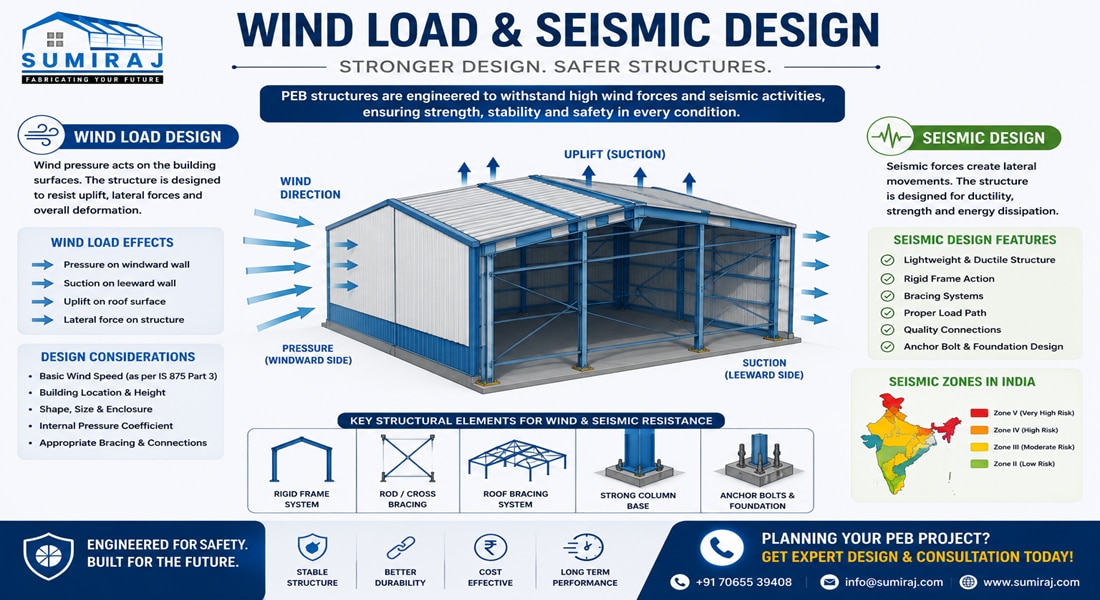
PEB structures are designed according to local environmental conditions.
Areas with:
- High wind speeds
- Heavy rainfall
- Earthquake zones
require stronger structural designs.
This may increase:
- Steel section sizes
- Bracing systems
- Foundation requirements
For example, a PEB building in coastal Gujarat may cost more than a similar building in a low-wind inland area.
6. Crane Requirement
Industrial buildings often require EOT cranes or gantry cranes.
Crane-compatible buildings need:
- Heavier columns
- Crane beams
- Additional bracing
- Stronger foundations
The crane capacity directly affects the structure cost.
Example:
A 5-ton crane building costs less than a 20-ton crane-supported structure.
7. Building Height and Clear Span
Large clear spans increase structural complexity.
A column-free warehouse with:
- 30-meter span
- 40-meter span
- 50-meter span
requires stronger framing systems and heavier steel sections.
Similarly, higher clear height requirements increase column sizes and steel tonnage.
8. Insulation Requirements
Insulation improves thermal efficiency and indoor comfort.
Common insulation materials:
- Rockwool
- Glass wool
- PUF panels
Industries requiring insulation:
- Pharmaceuticals
- Food processing
- Cold storage
- Electronics manufacturing
Although insulation increases upfront cost, it reduces long-term energy expenses.
9. Foundation and Civil Work
Foundation cost depends on:
- Soil condition
- Building load
- Groundwater level
- Crane loads
Poor soil conditions may require:
- Deeper foundations
- Pile foundations
- Additional reinforcement
This can significantly increase overall construction cost.
10. Mezzanine Floor Requirement
Adding mezzanine floors increases steel quantity and floor decking requirements.
Mezzanine floors are commonly used for:
- Office space
- Storage
- Production areas
The load-bearing capacity of the mezzanine also affects structural design and cost.
11. Location of the Project
Project location influences:
- Transportation cost
- Labor availability
- Material logistics
- Local regulations
Remote project sites may increase:
- Freight charges
- Installation expenses
- Project timelines
State-wise taxation and approval processes may also affect overall project budget.
12. Fabrication and Erection Complexity
Simple warehouse structures are easier and faster to install.
Complex projects involving:
- Multiple bays
- Curved roofs
- Architectural facades
- Multi-level structures
require more fabrication precision and erection effort.
This increases:
- Labor cost
- Installation time
- Engineering complexity
13. Accessories and Additional Components
Several optional components affect final project pricing.
Common accessories:
- Turbo ventilators
- Skylights
- Louvers
- Ridge ventilators
- Gutters
- Rolling shutters
- Sliding doors
- Canopies
More accessories increase overall project cost but improve building functionality.
14. Project Timeline
Urgent projects may require:
- Faster fabrication
- Additional labor shifts
- Priority logistics
Fast-track execution usually increases project cost.
Proper planning helps optimize both budget and delivery timelines.
Average PEB Building Cost in India (2026)
The approximate cost of PEB structures in India depends on specifications and project type.
| Building Type | Approximate Cost |
|---|---|
| Basic PEB Shed | ₹700 – ₹1,200/sq ft |
| Industrial Warehouse | ₹900 – ₹1,500/sq ft |
| Insulated PEB Building | ₹1,200 – ₹2,000/sq ft |
Note: Prices vary based on design, steel market rates, and project specifications.
How to Reduce PEB Building Cost
Businesses can optimize project cost by:
- Choosing optimized building dimensions
- Avoiding unnecessary building height
- Selecting suitable roofing systems
- Planning future expansion properly
- Working with experienced PEB manufacturers
- Finalizing technical requirements early
Efficient engineering plays a major role in reducing steel consumption and overall project expense.
Why Choose Sumiraj for PEB Projects?
At Sumiraj Industries Private Limited, we provide:
- Customized PEB solutions
- Cost-optimized structural designs
- High-quality fabrication
- Fast project execution
- End-to-end industrial building solutions
We specialize in:
- Warehouse construction
- Factory sheds
- Industrial buildings
- Logistics structures
- Steel building systems
Frequently Asked Questions (FAQs)
What is the average PEB building cost in India?
The average PEB building cost in India ranges between ₹700 to ₹2,000 per sq ft depending on project specifications, roofing type, crane requirements, insulation, and structural design.
Which factor affects PEB building cost the most?
Steel prices and building dimensions are among the biggest factors affecting PEB construction cost in India.
Is PEB cheaper than RCC construction?
Yes, PEB structures are generally more cost-effective and faster to construct compared to traditional RCC buildings for industrial applications.
How can I reduce industrial shed construction cost?
You can reduce industrial shed cost by optimizing building dimensions, selecting suitable roofing systems, avoiding unnecessary height, and working with experienced PEB manufacturers.
Does insulation increase PEB building cost?
Yes, insulation increases the initial project cost but helps reduce long-term energy expenses and improves thermal efficiency.
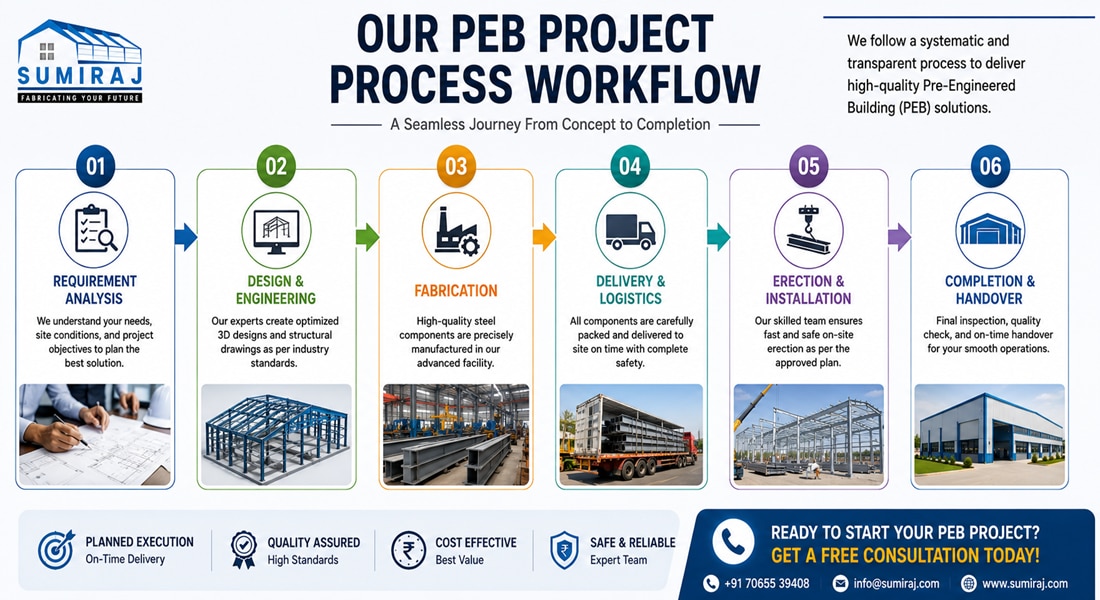
A successful PEB project requires proper planning, engineering, fabrication, and installation. Below is the standard workflow followed in most industrial PEB construction projects.
Conclusion
The cost of a PEB building in India depends on multiple technical, structural, and commercial factors including steel prices, building dimensions, roofing systems, crane requirements, insulation, wind load conditions, and project location.
Understanding these factors helps businesses make better investment decisions and optimize industrial construction budgets effectively.
Whether you are planning a warehouse, factory shed, logistics center, or industrial building, choosing the right PEB manufacturer plays a major role in project quality, execution speed, and long-term cost savings.
At Sumiraj Industries Private Limited, we provide customized and cost-effective PEB solutions designed for durability, efficiency, and future expansion.
Contact Sumiraj Industries Private Limited
📞 Phone: +91-7065539408
📧 Email: info@sumiraj.com
Get in touch with our team for customized PEB building solutions and project consultation.
)