
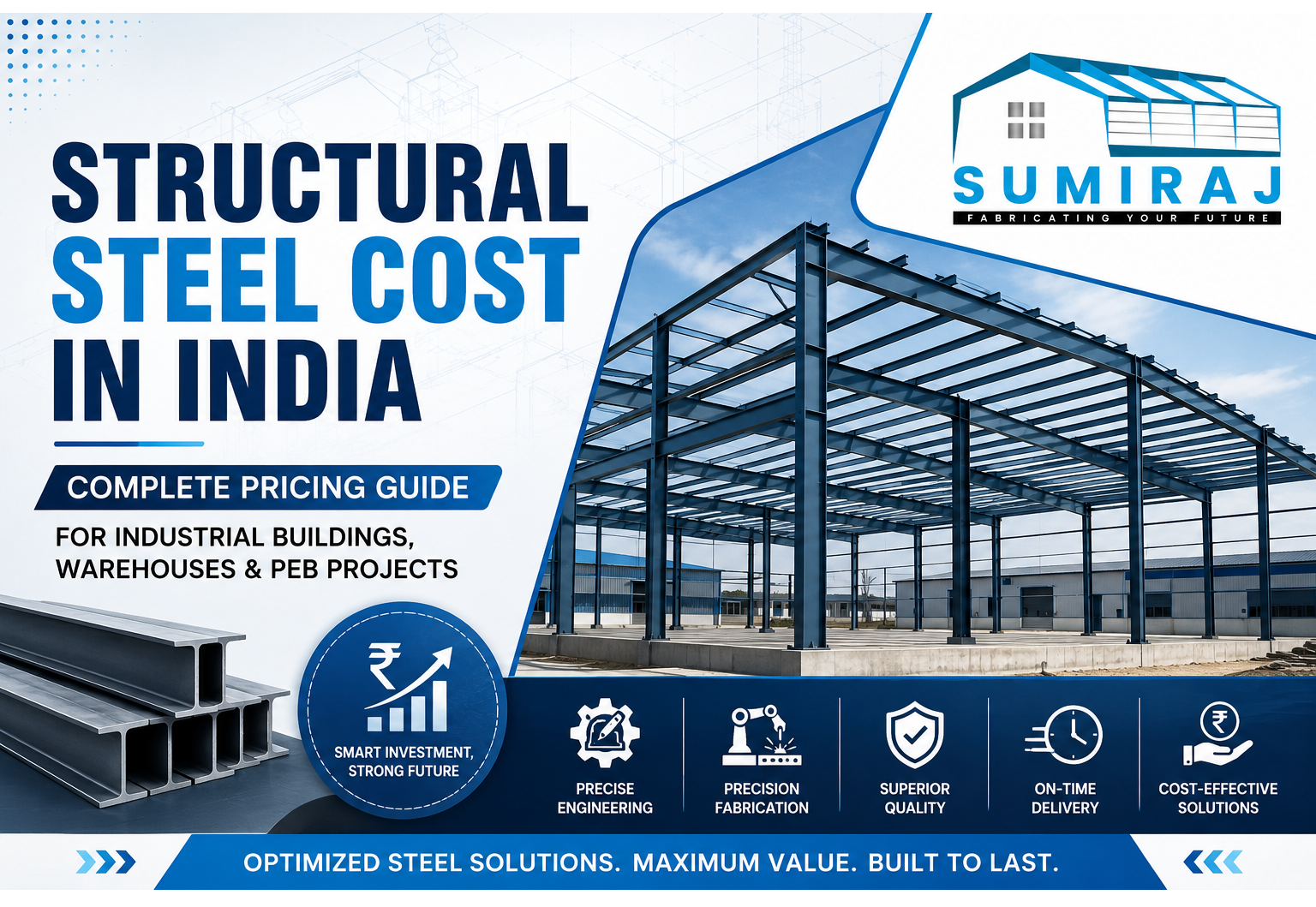
Structural Steel Cost in India: Complete Guide for Industrial Buildings, Warehouses & PEB Projects (2026)
Planning an industrial building, warehouse, factory, logistics hub, or commercial facility starts with understanding structural steel cost. Steel is the backbone of modern industrial construction because it offers superior strength, faster construction, durability, and long-term value compared to conventional building materials.
However, the overall cost of structural steel is influenced by multiple factors beyond the price per kilogram. Material grade, fabrication quality, transportation, project location, design complexity, and market fluctuations all play an important role in determining the final investment.
For factory owners, warehouse developers, logistics companies, contractors, and industrial investors across India, understanding these cost drivers helps in making informed decisions and achieving better project outcomes.
This guide explains everything you need to know about structural steel cost, how to optimize your investment, and why partnering with an experienced Pre-Engineered Building (PEB) manufacturer like Sumiraj delivers better long-term value.
Understanding Structural Steel Cost
Structural steel cost refers to the total expenditure involved in supplying, fabricating, transporting, and erecting steel members used in industrial and commercial construction.
Unlike conventional RCC structures, structural steel buildings are engineered with precision, reducing wastage and significantly improving construction speed.
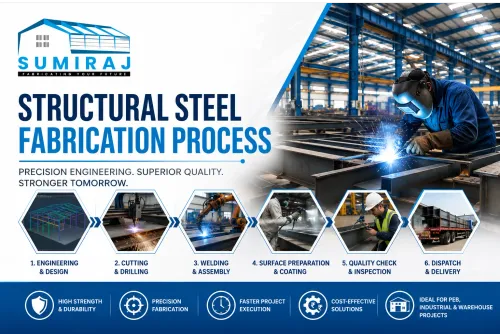
The total project cost generally includes:
Structural steel material
Engineering and detailing
Fabrication
Surface treatment and painting
Transportation
Site erection
Quality inspections
Fasteners and accessories
Looking only at the raw steel price can be misleading. The complete project cost should always be evaluated for accurate budgeting.
Why Structural Steel is the Preferred Choice for Industrial Buildings
Today's industries require buildings that can be constructed quickly while maintaining high structural integrity.
Structural steel provides several advantages:
Faster construction timelines
High load-bearing capacity
Excellent durability
Longer service life
Earthquake resistance
Easy future expansion
Lower maintenance
Sustainable and recyclable material
Better space utilization
Consistent manufacturing quality
These advantages make structural steel the preferred choice for factories, warehouses, logistics parks, manufacturing plants, commercial buildings, cold storage facilities, and distribution centers.
Factors Affecting Structural Steel Cost
1. Steel Grade
Different projects require different grades of structural steel.
Higher-grade steel offers improved strength but generally comes at a higher price.
Selecting the correct grade based on engineering calculations ensures cost efficiency without compromising safety.
2. Steel Market Prices
Steel prices fluctuate depending on:
Raw material availability
Global demand
Government policies
Fuel costs
Import-export conditions
Manufacturing demand
These fluctuations directly affect project budgets.
3. Building Design Complexity
Simple warehouse designs require fewer fabricated components than highly customized industrial buildings.
Complex roof systems, cranes, mezzanine floors, and heavy industrial loads increase fabrication requirements, influencing the final structural steel cost.
4. Fabrication Quality
Professional fabrication improves:
Dimensional accuracy
Structural strength
Installation speed
Overall project quality
Although precision fabrication may have a slightly higher upfront cost, it significantly reduces installation delays and future maintenance expenses.
5. Surface Protection
Steel structures require protection against corrosion.
Common protective systems include:
Primer coating
Epoxy paint
PU paint
Hot-dip galvanization
The required protection depends on the project's operating environment.
Industrial plants near coastal regions generally require higher corrosion resistance.
6. Transportation
Transportation costs depend on:
Distance from fabrication plant
Project location
Weight of steel
Road accessibility
Fuel prices
Proper logistics planning helps reduce transportation expenses.
7. Erection and Installation
Professional installation ensures:
Better structural stability
Faster completion
Worker safety
Reduced rework
Experienced erection teams improve overall project efficiency.
Average Structural Steel Cost Considerations
Instead of focusing only on steel rates, project owners should evaluate the complete lifecycle cost.
Major cost components include:
Engineering
Material procurement
Fabrication
Transportation
Erection
Corrosion protection
Maintenance
Future expansion capability
Choosing the lowest-priced supplier often leads to higher maintenance and repair costs in the long run.
How to Reduce Structural Steel Cost Without Compromising Quality
Smart planning can significantly optimize project costs.
Optimize Building Design
Efficient structural design minimizes unnecessary steel consumption while maintaining safety standards.
Choose an Experienced PEB Manufacturer
An experienced manufacturer provides optimized engineering, reducing material wastage.
Finalize Project Scope Early
Late design changes increase fabrication costs and project delays.
Use Standard Sections
Standardized steel sections simplify fabrication and reduce manufacturing costs.
Plan Logistics Efficiently
Coordinated transportation and site readiness minimize delays and additional handling expenses.
Focus on Lifecycle Value
Selecting high-quality steel and professional fabrication reduces maintenance costs throughout the building's lifespan.
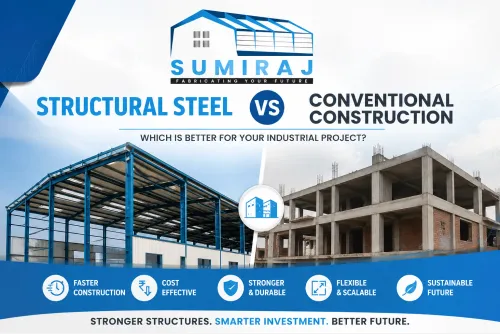
Structural Steel vs Conventional RCC Construction
| Feature | Structural Steel | Conventional RCC |
|---|---|---|
| Construction Speed | Very Fast | Slow |
| Expansion | Easy | Difficult |
| Durability | Excellent | Good |
| Maintenance | Low | Moderate |
| Quality Control | Factory Controlled | Site Dependent |
| Space Utilization | Better | Moderate |
| Sustainability | Highly Recyclable | Limited |
For industrial applications, structural steel often provides better long-term value despite higher initial material costs.
Structural Steel Cost for Different Applications
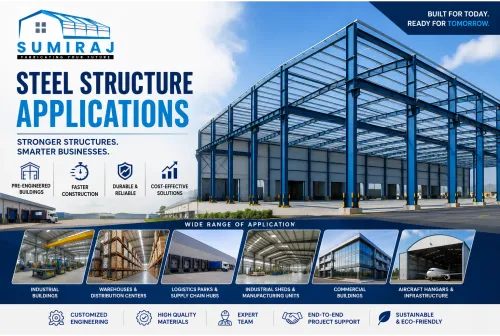
Structural steel is widely used in:
Industrial factories
Warehouses
Manufacturing plants
Logistics parks
Distribution centers
Cold storage facilities
Commercial buildings
Aircraft hangars
Multi-level industrial buildings
Agricultural structures
Each application requires customized engineering to optimize structural performance and cost.
Structural Steel Cost in Jaipur
Businesses searching for structural steel cost in Jaipur should evaluate more than just the quoted price. Engineering expertise, fabrication quality, project execution capability, and after-sales support all contribute to the overall value of a structural steel project.
Whether you are planning a warehouse, factory, logistics center, or industrial shed, working with an experienced PEB manufacturer ensures optimized designs, reduced material wastage, and faster project completion.
Similarly, companies looking for PEB manufacturers in Jaipur, industrial shed manufacturers in Jaipur, or warehouse construction solutions in Jaipur should compare suppliers based on technical capability, project experience, and long-term reliability rather than price alone.
Why Choose Sumiraj?
Sumiraj is committed to delivering high-quality Pre-Engineered Building solutions that combine engineering excellence with cost efficiency.
Our Strengths
Advanced engineering and design
Precision fabrication
High-quality structural steel
Timely project execution
Customized industrial solutions
Strict quality control
Experienced technical team
Reliable project management
Cost-effective PEB solutions
Customer-focused approach
Our goal is to help clients achieve durable, efficient, and future-ready industrial infrastructure while optimizing their overall project investment.
Frequently Asked Questions (FAQs)
1. What affects structural steel cost the most?
The primary factors include steel prices, building design, fabrication quality, transportation, coating requirements, and project complexity.
2. Is structural steel more economical than RCC?
For industrial buildings, structural steel often provides better long-term value due to faster construction, lower maintenance, and easier expansion.
3. Can structural steel buildings be expanded later?
Yes. One of the biggest advantages of steel structures is their flexibility for future extensions and modifications.
4. Does structural steel require maintenance?
Routine inspections and proper protective coatings help maintain structural performance for decades with relatively low maintenance requirements.
5. Why should I choose a PEB manufacturer instead of local fabricators?
Professional PEB manufacturers offer optimized engineering, factory-controlled quality, faster construction, and better project management, resulting in improved overall value.
6. How can I reduce my structural steel project cost?
Optimized design, early planning, selecting experienced manufacturers, and minimizing design changes help reduce overall project costs.
Conclusion
Understanding structural steel cost involves much more than comparing material prices. Engineering expertise, fabrication quality, logistics, installation, and lifecycle performance all influence the overall investment.
For industrial projects across India, choosing a trusted PEB manufacturer ensures higher quality, faster execution, optimized steel usage, and better long-term returns. By investing in professionally engineered structural steel solutions, businesses can improve operational efficiency while reducing maintenance and future expansion costs.
Discuss Your Project with Sumiraj
Planning a factory, warehouse, industrial shed, logistics facility, or manufacturing unit?
Connect with the experts at Sumiraj today for a personalized consultation. Reach out via WhatsApp or phone call to discuss your project requirements and receive a customized structural steel and PEB solution tailored to your business needs.
Subscribe to Our Newsletter
Subscribe to our updates and stay informed about the latest trends, innovations, and cost-saving solutions in PEB construction, industrial buildings, and warehouse development.